AMD Ryzen 7 9700F specifications and in-depth review

AMD Ryzen 7 9700F

Manufacturer: AMD

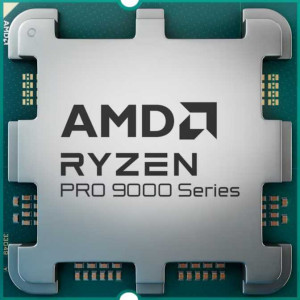
The AMD Ryzen 7 9700F is a desktop processor designed for the AM5 platform, targeting users who want a capable chip without integrated graphics. Built on a 4 nm semiconductor process, it pairs a reasonable 65W thermal design power with a turbo frequency that reaches 5.5 GHz, making it a solid option for systems where a discrete GPU handles all display output.

The chip features 8 cores and 16 threads, with a base clock of 3.8 GHz and an unlocked multiplier for tuning flexibility. Its cache hierarchy includes 640 KB of L1, 8 MB of L2, and 32 MB of L3 cache. On the memory side, it supports DDR5 at up to 5600 MHz across two channels, with a maximum capacity of 192 GB and optional ECC support. The processor also implements PCIe 5.0 and a broad instruction set that includes AVX2, AES, and FMA3.

Pros
  • The unlocked multiplier allows clock speed adjustments beyond stock settings without restrictions
  • DDR5 support with a maximum speed of 5600 MHz and dual-channel configuration enables substantial memory bandwidth
  • ECC memory support adds a layer of data integrity protection useful in reliability-sensitive workloads
  • A 65W TDP keeps power draw relatively contained for an 8-core desktop processor
  • PCIe 5.0 support ensures compatibility with current-generation expansion cards and storage devices
  • 192 GB maximum memory capacity offers considerable headroom for memory-intensive applications
Cons
  • No integrated graphics means a discrete GPU is mandatory even for basic display output
  • Without big.LITTLE architecture, the processor cannot assign lighter tasks to more efficient cores for power savings
  • The 32 MB L3 cache, split at 4 MB per core, may be a limiting factor in cache-sensitive workloads compared to processors with larger per-core allocations
Who is this for?

This processor suits desktop builders who want a capable 8-core chip with DDR5 memory support and PCIe 5.0 without the overhead of integrated graphics, making it a natural fit for systems already built around a discrete GPU. The unlocked multiplier makes it appealing to enthusiasts who want to tune clock speeds beyond defaults, while ECC memory support extends its usefulness to small workstations or reliability-conscious setups where data integrity matters.

Who is this NOT for?

Users who need a system capable of basic display output without a dedicated GPU will find this processor limiting, as it lacks integrated graphics entirely. It is also a poor fit for anyone looking to minimize power consumption through intelligent workload distribution, since the absence of big.LITTLE architecture means all cores operate under the same design with no efficiency cores for lighter tasks. Additionally, workflows that are highly sensitive to per-core cache availability may find the 4 MB L3 per core allocation insufficient for their needs.

General info:

Type Desktop
CPU socket AM5
chipset X670, B650, X870, B840, B850
Has integrated graphics
Thermal Design Power (TDP) 65W
semiconductor size 4 nm
CPU temperature 95 °C
PCI Express (PCIe) version 5
Supports 64-bit

The AMD Ryzen 7 9700F is a desktop processor built on a 4 nm semiconductor process and designed for the AM5 socket, with compatibility across a range of chipsets including X670, B650, X870, B840, and B850. It carries a 65W Thermal Design Power and a maximum operating temperature of 95 °C, while supporting PCIe 5.0 and 64-bit computing. The chip does not include integrated graphics, so a discrete GPU is required for display output.

Performance:

CPU speed 8 x 3.8 GHz
CPU threads 16 threads
turbo clock speed 5.5GHz
Has an unlocked multiplier
L2 cache 8 MB
L3 cache 32 MB
L1 cache 640 KB
L2 core 1 MB/core
L3 core 4 MB/core
Uses big.LITTLE technology
clock multiplier 38

The processor runs 8 cores at a base clock of 3.8 GHz, with 16 threads and a turbo clock speed reaching 5.5 GHz, driven by a clock multiplier of 38. It features an unlocked multiplier, giving users the ability to adjust clock speeds beyond default settings. Cache is arranged across three levels — 640 KB of L1, 8 MB of L2 at 1 MB per core, and 32 MB of L3 at 4 MB per core — while big.LITTLE heterogeneous core technology is not used, meaning all cores share the same architecture.

Benchmarks:

Integrated graphics:

Memory:

RAM speed (max) 5600 MHz
DDR memory version 5
memory channels 2
maximum memory amount 192GB
Supports ECC memory

This processor supports DDR5 memory across two channels, with a maximum RAM speed of 5600 MHz and a total capacity ceiling of 192 GB. It also includes support for ECC memory, which provides basic error-correcting capability for workloads where data integrity is a consideration.

Features:

instruction sets MMX, F16C, FMA3, AES, AVX, AVX2, SSE 4.1, SSE 4.2
uses multithreading
Has NX bit

The processor supports multithreading and includes the NX bit for hardware-level memory protection. Its instruction set support covers a broad range of extensions — MMX, F16C, FMA3, AES, SSE 4.1, SSE 4.2, AVX, and AVX2 — enabling efficient handling of workloads that take advantage of vectorized and encrypted computation.
Final Verdict

The AMD Ryzen 7 9700F is a well-defined desktop processor that makes a clear case for itself through its combination of DDR5 memory support, PCIe 5.0 compatibility, and an unlocked multiplier that gives builders genuine tuning flexibility. Its 65W TDP and ECC memory support further extend its appeal to users who value efficiency and reliability within a discrete-GPU-dependent build. The absence of integrated graphics and efficiency cores does narrow its audience, but for those building around a dedicated GPU and looking for a tunable, modern AM5 platform chip, the Ryzen 7 9700F represents a focused and well-rounded option.

Popular Comparisons

AMD Ryzen 7 9700F
AMD Ryzen 7 9700F
VS
AMD Ryzen 5 9500F
AMD Ryzen 5 9500F
AMD Ryzen 7 9700F
AMD Ryzen 7 9700F
VS
AMD Ryzen 5 9600X
AMD Ryzen 5 9600X
AMD Ryzen 7 9700F
AMD Ryzen 7 9700F
VS
AMD Ryzen 7 5800XT
AMD Ryzen 7 5800XT
AMD Ryzen 7 9700F
AMD Ryzen 7 9700F
VS
AMD Ryzen 5 7500F
AMD Ryzen 5 7500F
AMD Ryzen 7 9700F
AMD Ryzen 7 9700F
VS
AMD Ryzen 5 8600G
AMD Ryzen 5 8600G
AMD Ryzen 7 9700F
AMD Ryzen 7 9700F
VS
Apple M5 (9-core CPU)
AMD Ryzen 7 9700F
AMD Ryzen 7 9700F
VS
Intel Core i7-14700K
AMD Ryzen 7 9700F
AMD Ryzen 7 9700F
VS
Apple M5
Apple M5
AMD Ryzen 7 9700F
AMD Ryzen 7 9700F
VS
Intel Core i5-14400F
AMD Ryzen 7 9700F
AMD Ryzen 7 9700F
VS
AMD Ryzen 9 9950X3D
AMD Ryzen 9 9950X3D
AMD Ryzen 7 9700F
AMD Ryzen 7 9700F
VS
Intel Core i5-14600KF