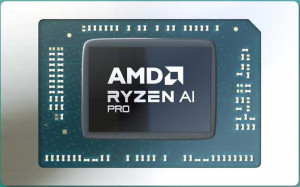
AMD Ryzen AI Max Plus 395 specifications and in-depth review

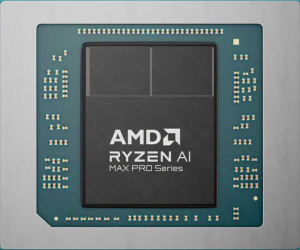
AMD Ryzen AI Max Plus 395

Manufacturer: AMD

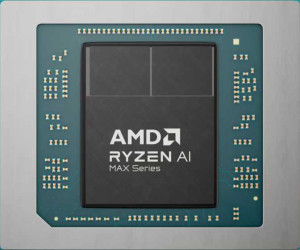
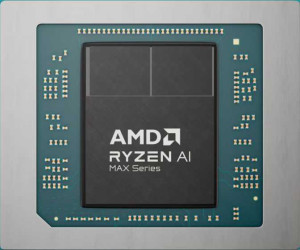
The AMD Ryzen AI Max Plus 395 is a processor designed for both laptop and desktop platforms, built on a compact 4nm semiconductor process. It offers 16 cores and 32 threads, with a base clock speed of 3GHz across all cores and a turbo frequency reaching up to 5.1GHz, making it a capable option for sustained multi-threaded workloads within a 55W thermal envelope.

On the memory side, the Ryzen AI Max Plus 395 supports DDR5 RAM across four channels, with speeds up to 8000MHz and a maximum capacity of 128GB, including ECC memory support. The integrated Radeon 8060S graphics runs at a base clock of 1295MHz with a turbo of 2900MHz, backed by 2560 shading units and compatibility with DirectX 12 and OpenGL 4.6. Cache configuration includes 1280KB of L1, 16MB of L2, and 64MB of L3. In benchmarks, the chip scores 54021 in PassMark multi-core and 17698 in Geekbench 6 multi-core testing.

Pros
  • Supports DDR5 memory across four channels with speeds up to 8000MHz and a maximum capacity of 128GB, offering substantial headroom for memory-intensive workloads
  • ECC memory support adds a layer of data integrity protection useful in reliability-sensitive environments
  • The integrated Radeon 8060S can drive up to four displays simultaneously, making it practical for multi-monitor setups without a discrete GPU
  • A broad set of instruction set extensions, including AVX2, FMA3, and AES, ensures compatibility with a wide range of optimized and security-sensitive software
  • PCIe 4.0 support enables compatibility with modern high-bandwidth storage and expansion devices
  • Fits both laptop and desktop platforms, providing deployment flexibility across different form factors
Cons
  • The multiplier is locked, removing any option for manual overclocking beyond the fixed turbo behavior
  • A 55W TDP may constrain sustained performance in thermally limited laptop chassis
  • Single-core benchmark scores suggest limited headroom for tasks that rely heavily on single-threaded execution
  • Does not use big.LITTLE heterogeneous core architecture, meaning all cores operate under the same configuration without efficiency-core assistance for lighter tasks
Who is this for?

This processor is well-suited to users who need sustained multi-threaded throughput across both laptop and desktop environments, particularly those running heavily parallelized workloads such as content creation, data processing, or software compilation. The four-channel DDR5 memory support with ECC capability makes it a practical fit for reliability-sensitive professional environments where data integrity matters. Additionally, the integrated Radeon 8060S with support for up to four simultaneous displays and broad API coverage makes it a reasonable choice for users who need a capable multi-monitor setup without relying on a discrete GPU.

Who is this NOT for?

Users who prioritize single-threaded application performance may find the single-core benchmark results limiting, as tasks that depend heavily on per-core speed rather than core count will see reduced returns. The locked multiplier also makes this processor a poor fit for enthusiasts interested in manual overclocking, since there is no flexibility to push frequencies beyond the fixed turbo behavior. Furthermore, the 55W TDP may pose challenges in thermally constrained laptop designs, where sustained workloads could lead to thermal throttling depending on the cooling solution employed.

General info:

Type Laptop, Desktop
Has integrated graphics
Thermal Design Power (TDP) 55W
semiconductor size 4 nm
CPU temperature 100 °C
PCI Express (PCIe) version 4
Supports 64-bit

The AMD Ryzen AI Max Plus 395 is designed for use in both laptop and desktop systems, built on a 4nm semiconductor process with a Thermal Design Power of 55W. It includes integrated graphics and fully supports 64-bit computing. The processor has a maximum operating temperature of 100°C and connects via PCIe 4.0, providing compatibility with a range of modern expansion and storage devices.

Performance:

CPU speed 16 x 3 GHz
CPU threads 32 threads
turbo clock speed 5.1GHz
Has an unlocked multiplier
L2 cache 16 MB
L3 cache 64 MB
L1 cache 1280 KB
L2 core 1 MB/core
L3 core 4 MB/core
Uses big.LITTLE technology
clock multiplier 30

The AMD Ryzen AI Max Plus 395 runs 16 cores at a base clock of 3GHz, supporting 32 threads for handling parallel workloads, with a turbo frequency that reaches up to 5.1GHz. The clock multiplier is set at 30, and the processor does not feature an unlocked multiplier or big.LITTLE heterogeneous core architecture. Cache is organized across three levels: 1280KB of L1, 16MB of L2 at 1MB per core, and 64MB of L3 at 4MB per core, providing a well-structured memory hierarchy to support the processor's multi-threaded operation.

Benchmarks:

PassMark result 54021
PassMark result (single) 4142
Geekbench 6 result (multi) 17698
Geekbench 6 result (single) 2774
PassMark result (overclocked) 57021

In standardized benchmark testing, the AMD Ryzen AI Max Plus 395 achieves a PassMark multi-core score of 54021, with a single-core result of 4142 and an overclocked PassMark score of 57021. Geekbench 6 testing places the processor at 17698 in the multi-core test and 2774 in the single-core evaluation, offering a consistent picture of its performance across both threaded and single-threaded workloads.

Integrated graphics:

GPU clock speed 1295 MHz
GPU name Radeon 8060S
GPU turbo 2900 MHz
DirectX version DirectX 12
supported displays 4
OpenGL version 4.6
OpenCL version 3
texture mapping units (TMUs) 160
render output units (ROPs) 64
shading units 2560

The integrated graphics solution in the AMD Ryzen AI Max Plus 395 is the Radeon 8060S, running at a base clock of 1295MHz and capable of boosting up to 2900MHz. It is built with 2560 shading units, 160 texture mapping units, and 64 render output units, and can drive up to four displays simultaneously. API support covers DirectX 12, OpenGL 4.6, and OpenCL 3, providing a broad foundation for both general rendering tasks and compute workloads.

Memory:

RAM speed (max) 8000 MHz
DDR memory version 5
memory channels 4
maximum memory amount 128GB
Supports ECC memory

The AMD Ryzen AI Max Plus 395 supports DDR5 memory across four channels, with a maximum RAM speed of 8000MHz and a total capacity ceiling of 128GB. The processor also includes support for ECC memory, adding a layer of reliability for workloads where data integrity is a priority.

Features:

instruction sets MMX, F16C, FMA3, AES, AVX, AVX2, SSE 4.1, SSE 4.2
uses multithreading
Has NX bit

The AMD Ryzen AI Max Plus 395 supports multithreading and includes the NX bit for hardware-level memory protection. Its instruction set support covers a broad range of extensions, including MMX, F16C, FMA3, AES, AVX and AVX2, as well as SSE 4.1 and SSE 4.2, enabling compatibility with a wide variety of optimized software and security-sensitive applications.
Final Verdict

The AMD Ryzen AI Max Plus 395 is a well-specified processor that makes a strong case for users who need capable multi-threaded performance across both laptop and desktop deployments. Its four-channel DDR5 memory architecture with ECC support, combined with a broad instruction set and an integrated GPU able to handle up to four displays, gives it a practical edge in professional and content-focused environments. That said, its locked multiplier and moderate single-core output mean it is best appreciated in workloads that can leverage its full core and memory bandwidth rather than those demanding peak per-core speed. For users whose needs align with sustained parallel processing and platform flexibility, the Ryzen AI Max Plus 395 represents a coherent and well-rounded solution.

Popular Comparisons

AMD Ryzen AI Max Plus 395
VS
AMD Ryzen 9 9955HX
AMD Ryzen 9 9955HX
AMD Ryzen AI Max Plus 395
VS
AMD Ryzen 9 9955HX3D
AMD Ryzen AI Max Plus 395
VS
AMD Ryzen AI Max 385
AMD Ryzen AI Max Plus 395
VS
AMD Ryzen AI 9 HX 375
AMD Ryzen AI Max Plus 395
VS
AMD Ryzen AI 9 HX 370
AMD Ryzen AI Max Plus 395
VS
AMD Ryzen 7 Pro 8840U
AMD Ryzen AI Max Plus 395
VS
AMD Ryzen AI 9 365
AMD Ryzen AI 9 365
AMD Ryzen AI Max Plus 395
VS
AMD Ryzen 9 9950X3D
AMD Ryzen 9 9950X3D
AMD Ryzen AI Max Plus 395
VS
AMD Ryzen 7 9800X3D
AMD Ryzen 7 9800X3D
AMD Ryzen AI Max Plus 395
VS
AMD Ryzen 9 9950X
AMD Ryzen 9 9950X
AMD Ryzen AI Max Plus 395
VS
AMD Ryzen 9 8945HS
AMD Ryzen 9 8945HS
AMD Ryzen AI Max Plus 395
VS
AMD Ryzen AI Max 390
AMD Ryzen AI Max Plus 395
VS
AMD Ryzen AI 9 HX Pro 370
AMD Ryzen AI Max Plus 395
VS
AMD Ryzen AI Max Pro 385
AMD Ryzen AI Max Plus 395
VS
AMD Ryzen Z2 Extreme
AMD Ryzen AI Max Plus 395
VS
Apple M4 (8-core CPU)
AMD Ryzen AI Max Plus 395
VS
Intel Core Ultra 9 285H
AMD Ryzen AI Max Plus 395
VS
Intel Core Ultra 9 285K
AMD Ryzen AI Max Plus 395
VS
AMD Ryzen AI Z2 Extreme
AMD Ryzen AI Max Plus 395
VS
AMD Ryzen AI Max Plus Pro 395
AMD Ryzen AI Max Plus 395
VS
AMD Ryzen Z2
AMD Ryzen Z2