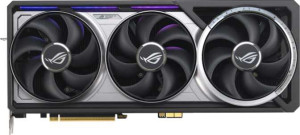
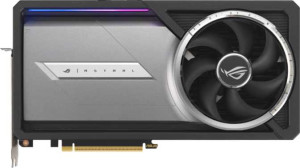
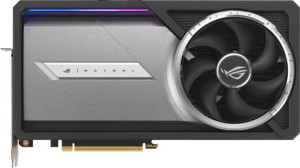
Asus ROG Astral GeForce RTX 5090 OC Edition specifications and in-depth review

Asus ROG Astral GeForce RTX 5090 OC Edition

Manufacturer: Asus

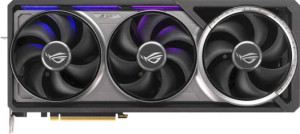
The Asus ROG Astral GeForce RTX 5090 OC Edition is a flagship-tier graphics card designed for demanding workloads and high-resolution rendering. Built on NVIDIA's Blackwell architecture and manufactured using a 5 nm semiconductor process, it houses 92,200 million transistors and 21,760 shading units, reflecting a substantial investment in raw compute density. The card carries a 575W TDP, which reflects the scale of its internal hardware, and it features RGB lighting alongside a conventional air-cooled thermal solution.

On the memory side, the card is equipped with 32GB of GDDR7 VRAM running across a 512-bit bus, delivering a maximum bandwidth of 1,790 GB/s at an effective speed of 28,000 MHz — figures that point to serious throughput capacity for memory-intensive tasks. Floating-point performance is rated at 112.3 TFLOPS, with a texture rate of 1,754 GTexels/s and 176 render output units. The card supports DirectX 12 Ultimate, OpenGL 4.6, OpenCL 3, ray tracing, DLSS, and Intel Resizable BAR, and can drive up to four displays simultaneously through its two HDMI 2.1b ports and three DisplayPort outputs. It connects via PCIe 5 and also supports ECC memory and double-precision floating-point operations.

Pros
  • 32GB of GDDR7 VRAM across a 512-bit bus delivers 1,790 GB/s of memory bandwidth, supporting highly memory-intensive workloads without bottlenecking throughput
  • Hardware ray tracing and DLSS support are both present, enabling access to modern rendering techniques without requiring additional configuration
  • Five video outputs — two HDMI 2.1b and three DisplayPort — allow up to four displays to be connected simultaneously, offering flexible multi-monitor setups
  • ECC memory support adds a layer of data integrity for workloads where memory error correction is important
  • Double-precision floating-point (DPFP) support extends the card's utility beyond graphics rendering into compute-oriented tasks
  • Intel Resizable BAR support allows the CPU to access the full GPU frame buffer at once, which can improve data transfer efficiency in compatible systems
Cons
  • A 575W TDP places significant demands on system power delivery and cooling infrastructure, requiring a well-specced PSU and chassis
  • The card measures 357.6 mm in width and 149.3 mm in height, which may not fit in smaller or mid-tower cases without careful compatibility checks
  • Air-water hybrid cooling is not included, so thermal management relies entirely on the conventional air-cooled solution provided
  • No USB-C output is available, limiting direct connectivity with displays or devices that use only that interface
Who is this for?

This card is well-matched to users running demanding rendering, simulation, or compute workloads that benefit from high memory bandwidth and DPFP support — including 3D artists, visualization professionals, and those working with large datasets. The 32GB GDDR7 VRAM across a 512-bit bus makes it a strong fit for tasks that require retaining large assets or textures in memory without repeated offloading. Users who need multi-display setups of up to four screens will also find the five-output configuration practical, while ECC memory support adds reliability for workloads where data integrity is critical.

Who is this NOT for?

The card's 575W TDP and 357.6 mm physical length make it poorly suited to compact or mid-tower builds where space and power headroom are limited — users with smaller cases or constrained power supplies would face real compatibility challenges. Those looking for USB-C display connectivity will find the port layout restrictive, as no such output is available. Similarly, users who require a hybrid air-water cooling solution for thermally demanding environments will need to look elsewhere, since the card relies solely on conventional air cooling.

Performance:

GPU clock speed 2017 MHz
GPU turbo 2580 MHz
pixel rate 454.1 GPixel/s
floating-point performance 112.3 TFLOPS
texture rate 1754 GTexels/s
GPU memory speed 1750 MHz
shading units 21760
texture mapping units (TMUs) 680
render output units (ROPs) 176
Has Double Precision Floating Point (DPFP)

The Asus ROG Astral GeForce RTX 5090 OC Edition operates at a base GPU clock of 2,017 MHz, rising to 2,580 MHz under boost conditions, while its GPU memory runs at 1,750 MHz. With 21,760 shading units and 680 texture mapping units, the card achieves a texture rate of 1,754 GTexels/s and a pixel rate of 454.1 GPixel/s, supported by 176 render output units. Floating-point performance is rated at 112.3 TFLOPS, and the card includes support for double-precision floating-point (DPFP) operations, broadening its suitability beyond standard rendering tasks.

Memory:

effective memory speed 28000 MHz
maximum memory bandwidth 1790 GB/s
VRAM 32GB
GDDR version GDDR7
memory bus width 512-bit
Supports ECC memory

The card is equipped with 32GB of GDDR7 VRAM running across a 512-bit memory bus, with an effective memory speed of 28,000 MHz that translates to a maximum memory bandwidth of 1,790 GB/s. This combination of wide bus width and high transfer rate enables substantial data throughput for memory-intensive workloads. The memory subsystem also supports ECC, allowing the card to detect and correct memory errors where reliability is a priority.

Features:

DirectX version DirectX 12 Ultimate
OpenGL version 4.6
OpenCL version 3
Supports multi-display technology
supports ray tracing
Supports 3D
supports DLSS
has XeSS (XMX)
AMD SAM / Intel Resizable BAR Intel Resizable BAR
has LHR
has RGB lighting
supported displays 4

The Asus ROG Astral GeForce RTX 5090 OC Edition supports DirectX 12 Ultimate, OpenGL 4.6, and OpenCL 3, covering a broad range of graphics and compute APIs. It includes hardware-level ray tracing, DLSS, and stereoscopic 3D support, while XeSS (XMX) is not present. The card works with Intel Resizable BAR for improved CPU-to-GPU data access and does not carry LHR restrictions. Multi-display output is supported across up to four screens simultaneously, and RGB lighting is built into the card's design.

Ports:

has an HDMI output
HDMI ports 2
HDMI version HDMI 2.1b
DisplayPort outputs 3
USB-C ports 0
DVI outputs 0
mini DisplayPort outputs 0

The card's output configuration consists of two HDMI 2.1b ports and three DisplayPort outputs, providing a total of five video connections for driving up to four displays simultaneously. There are no USB-C, DVI, or mini DisplayPort outputs on this model, keeping the port layout focused on the two modern connector standards.

General info:

GPU architecture Blackwell
Thermal Design Power (TDP) 575W
PCI Express (PCIe) version 5
semiconductor size 5 nm
number of transistors 92200 million
Has air-water cooling
width 357.6 mm
height 149.3 mm

The card is built on the Blackwell architecture, using a 5 nm manufacturing process that integrates 92,200 million transistors onto the die. It connects via PCIe 5 and carries a 575W TDP, reflecting the power demands of its hardware configuration. Cooling is handled without an air-water hybrid solution, relying instead on a conventional thermal design. Physically, the card measures 357.6 mm in width and 149.3 mm in height, giving a clear sense of its physical footprint within a system.
Final Verdict

The Asus ROG Astral GeForce RTX 5090 OC Edition is a technically dense graphics card built around the Blackwell architecture, with its most defining characteristic being the 32GB GDDR7 memory subsystem delivering 1,790 GB/s of bandwidth — a specification that positions it firmly toward users with serious rendering, compute, or multi-display demands. Its support for ray tracing, DLSS, DPFP, and ECC memory rounds out a feature set aimed at professional and enthusiast workloads alike. That said, its 575W power requirement and considerable physical dimensions mean it demands a well-prepared system to function as intended. For users whose environments can accommodate it, the ROG Astral RTX 5090 OC Edition represents a high-specification option in the graphics card category with few compromises on capability.

Popular Comparisons

Asus ROG Astral GeForce RTX 5090 OC Edition
VS
Asus ROG Astral GeForce RTX 5090 BTF Edition
Asus ROG Astral GeForce RTX 5090 OC Edition
VS
Asus ROG Astral GeForce RTX 5090 BTF OC Edition
Asus ROG Astral GeForce RTX 5090 OC Edition
VS
Asus ROG Astral GeForce RTX 5090
Asus ROG Astral GeForce RTX 5090 OC Edition
VS
Nvidia RTX Pro 4500 Blackwell
Asus ROG Astral GeForce RTX 5090 OC Edition
VS
Nvidia RTX Pro 6000 Blackwell Server Edition
Asus ROG Astral GeForce RTX 5090 OC Edition
VS
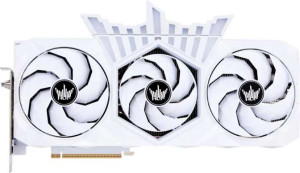
Galax GeForce RTX 5070 Ti HOF OC Lab Deluxe
Asus ROG Astral GeForce RTX 5090 OC Edition
VS
Galax GeForce RTX 5090 D Luna
Asus ROG Astral GeForce RTX 5090 OC Edition
VS
Galax GeForce RTX 5080 HOF OC Lab Plus
Asus ROG Astral GeForce RTX 5090 OC Edition
VS
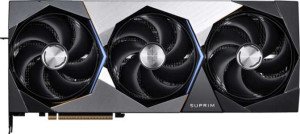
MSI GeForce RTX 5090 Suprim OC
Asus ROG Astral GeForce RTX 5090 OC Edition
VS
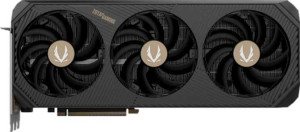
Zotac Gaming GeForce RTX 5090 Solid
Asus ROG Astral GeForce RTX 5090 OC Edition
VS
Gigabyte GeForce RTX 5090 Gaming OC
Asus ROG Astral GeForce RTX 5090 OC Edition
VS
Gainward GeForce RTX 5090 Phantom GS
Asus ROG Astral GeForce RTX 5090 OC Edition
VS
Gigabyte Aorus GeForce RTX 5090 Master
Asus ROG Astral GeForce RTX 5090 OC Edition
VS
MSI GeForce RTX 5090 Gaming Trio OC
Asus ROG Astral GeForce RTX 5090 OC Edition
VS
Asus ROG Astral LC GeForce RTX 5090
Asus ROG Astral GeForce RTX 5090 OC Edition
VS
Asus ROG Astral LC GeForce RTX 5090 OC Edition
Asus ROG Astral GeForce RTX 5090 OC Edition
VS
MSI GeForce RTX 5090 Suprim Liquid SOC
Asus ROG Astral GeForce RTX 5090 OC Edition
VS
Asus TUF Gaming GeForce RTX 5090 OC Edition
Asus ROG Astral GeForce RTX 5090 OC Edition
VS
MSI GeForce RTX 5090 Ventus 3X OC
Asus ROG Astral GeForce RTX 5090 OC Edition
VS
Gigabyte Aorus GeForce RTX 5090 Master Ice
Asus ROG Astral GeForce RTX 5090 OC Edition
VS
Asus TUF Gaming GeForce RTX 5090
Asus ROG Astral GeForce RTX 5090 OC Edition
VS
Nvidia GeForce RTX 5090