Asus ROG Strix OLED XG27UCDMG 27" specifications and in-depth review

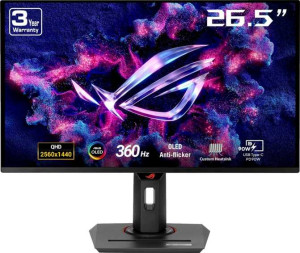
Asus ROG Strix OLED XG27UCDMG 27"

Manufacturer: Asus

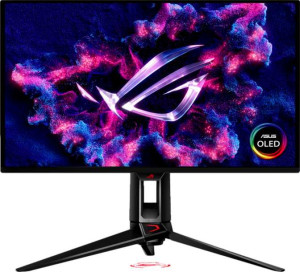
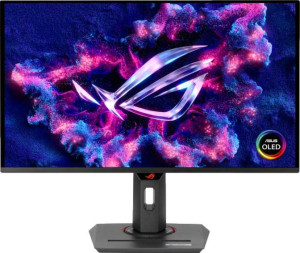
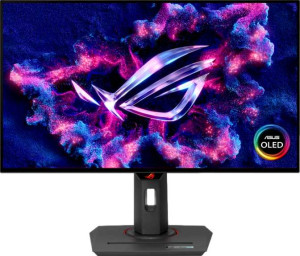
The Asus ROG Strix OLED XG27UCDMG is a 27-inch gaming monitor built around an OLED panel delivering a native resolution of 3840 x 2160 pixels. With a pixel density of 166 ppi and a 240Hz refresh rate, it targets users who need both sharp detail and smooth motion in demanding applications. The display carries a matte, anti-glare coating and supports portrait mode alongside tilt, swivel, and VESA mounting options, giving it reasonable ergonomic flexibility for different desk setups.

On the technical side, the panel achieves a contrast ratio of 1,500,000:1 with a typical brightness of 450 nits and covers 1,073 million colors at 10-bit depth, while the response time is rated at 0.03ms. Adaptive sync support spans Nvidia G-Sync, Nvidia G-Sync Compatible, AMD FreeSync, and AMD FreeSync Premium Pro. Connectivity includes two HDMI 2.1 ports, one DisplayPort 1.4 output, USB Type-C, four USB 3.1 ports, and a 3.5mm audio jack. Operating power consumption is listed at 80W, with a standby draw of 0.5W.

Pros
  • The OLED panel delivers a contrast ratio of 1,500,000:1, producing deep blacks and vivid differentiation between light and dark areas
  • A 240Hz refresh rate combined with a 0.03ms response time makes the display well-suited for fast-paced content where motion clarity matters
  • Adaptive sync support covers both Nvidia G-Sync and AMD FreeSync Premium Pro, making it compatible with a wide range of graphics hardware
  • The stand supports tilt, swivel, and portrait mode rotation, along with VESA mount compatibility, offering meaningful ergonomic and placement flexibility
  • Two HDMI 2.1 ports alongside a DisplayPort 1.4 output and USB Type-C provide a versatile range of video input options
  • The 178-degree horizontal and vertical viewing angles mean image quality remains consistent when viewed from off-center positions
Cons
  • Color calibration is not supported, which limits fine-tuning options for color-sensitive workflows
  • There are no built-in stereo speakers, so a separate audio solution is required
  • The monitor carries an EU energy label of F, indicating relatively high energy consumption for its class
  • At 7,440 g, the unit is on the heavier side, which may complicate repositioning or mounting
  • Wi-Fi, Ethernet, and AirPlay are absent, restricting the monitor to wired connections only
Who is this for?

This monitor is well-suited to PC gamers who prioritize smooth, responsive visuals, as the combination of a 240Hz refresh rate and 0.03ms response time handles fast-paced gameplay without visible ghosting or lag. The broad adaptive sync compatibility — spanning both Nvidia and AMD ecosystems — means it works cleanly with a wide range of gaming rigs. Users who frequently switch between multiple sources or devices will also appreciate the dual HDMI 2.1 inputs, USB Type-C port, and four USB 3.1 connections, making it practical for multi-device desktop setups. The tilt, swivel, and portrait mode support further suits those who want flexibility in how they arrange their workspace.

Who is this NOT for?

Users with color-critical workflows such as professional photo editing or print production will find this monitor limiting, as it does not support color calibration. Those who rely on built-in audio will need a separate solution, since there are no onboard speakers. The monitor's EU energy label of F makes it a poor fit for environments or users where low power consumption is a priority. Additionally, at 7,440 g it is not easily repositioned, so anyone frequently reconfiguring their workspace may find the physical footprint inconvenient. Users who depend on wireless connectivity will also be underserved, as Wi-Fi, Ethernet, and AirPlay are all absent.

Display:

Display type OLED/AMOLED
response time 0.03 ms
screen size 26.5"
resolution 3840 x 2160 px
pixel density 166 ppi
Adaptive synchronization Nvidia G-Sync, AMD FreeSync, Nvidia G-Sync Compatible, AMD FreeSync Premium Pro
has anti-glare coating
refresh rate 240Hz
maximum horizontal viewing angle 178º
maximum vertical viewing angle 178º
has a matte panel
has a glossy panel
has a touch screen

The display uses OLED/AMOLED technology across a 26.5-inch panel with a resolution of 3840 x 2160 pixels and a pixel density of 166 ppi. It runs at a 240Hz refresh rate with a response time of just 0.03ms, and supports adaptive sync across Nvidia G-Sync, Nvidia G-Sync Compatible, AMD FreeSync, and AMD FreeSync Premium Pro. Both horizontal and vertical viewing angles reach 178 degrees, and the panel comes with a matte, anti-glare coating rather than a glossy finish. Touch input is not supported.

General info:

Type Gaming
EU energy label F
supports total tilt
Has a swivel stand
Supports VESA mount
height 369.2 mm
width 610.3 mm
thickness 66.5 mm
weight 7440 g
supports portrait mode
volume 14983.96354 cm³

This is a gaming-type monitor with an EU energy label of F. Its physical dimensions are 610.3 mm wide, 369.2 mm tall, and 66.5 mm thick, with a total weight of 7,440 g and a volume of approximately 14,983.96 cm³. The stand supports tilt, swivel, and portrait mode, and the monitor is also compatible with VESA mounting, offering a reasonable degree of placement flexibility.

Colors:

brightness (typical) 450 nits
supports color calibration
display colors 1073 million
bit depth 10-bit
contrast ratio 1500000:1

The display delivers a typical brightness of 450 nits and a contrast ratio of 1,500,000:1, with a 10-bit color depth enabling a palette of 1,073 million colors. Color calibration is not supported out of the box.

Connectivity:

HDMI ports 2
supports Thunderbolt
DisplayPort outputs 1
DisplayPort version DisplayPort 1.4
has a socket for a 3.5 mm audio jack
has a DVI connector
USB ports 4
USB version 3.1
Has USB Type-C
HDMI version HDMI 2.1
supports Ethernet
supports Wi-Fi
has AirPlay
mini DisplayPort outputs 0
has a VGA connector

The monitor offers a solid set of video inputs, including two HDMI 2.1 ports and one DisplayPort 1.4 output, while mini DisplayPort, DVI, and VGA connectors are absent. On the USB side, there are four USB 3.1 ports along with a USB Type-C connection, and a 3.5mm headset jack is also present. Thunderbolt is not supported, and the monitor does not include Ethernet, Wi-Fi, or AirPlay connectivity.

Power:

operating power consumption 80W
standby power consumption 0.5W

The monitor draws 80W during normal operation and drops to a low 0.5W in standby mode.

Features:

has PiP
has stereo speakers
has built-in smart TV
has a remote control
supports Dolby Digital
supports Dolby Digital Plus
has DTS Surround
has an ambient light sensor
has a front camera

The monitor includes Picture-in-Picture (PiP) support, allowing two input sources to be displayed simultaneously. Beyond that, the feature set is fairly minimal — there are no stereo speakers, no ambient light sensor, and no front camera. Audio formats such as Dolby Digital, Dolby Digital Plus, and DTS Surround are not supported, and the monitor does not include a remote control or built-in smart TV functionality.
Final Verdict

The Asus ROG Strix OLED XG27UCDMG is a capable gaming monitor built around a specification set that prioritizes motion clarity and visual depth. Its 240Hz refresh rate paired with a 1,500,000:1 contrast ratio gives it genuine strengths for fast-paced gaming environments, and the broad adaptive sync support across both major GPU ecosystems adds practical appeal for a wide range of desktop builds. That said, the absence of color calibration, built-in audio, and wireless connectivity narrows its appeal to a fairly specific type of user. For those whose needs align with what it offers — responsive gameplay, flexible connectivity, and ergonomic stand adjustments — it delivers a well-rounded package within the gaming monitor category.

Popular Comparisons

Asus ROG Strix OLED XG27UCDMG 27"
VS
Asus ROG Strix OLED XG27AQDMG 27"
Asus ROG Strix OLED XG27UCDMG 27"
VS
Asus ROG Strix OLED XG27ACDNG 27"
Asus ROG Strix OLED XG27UCDMG 27"
VS
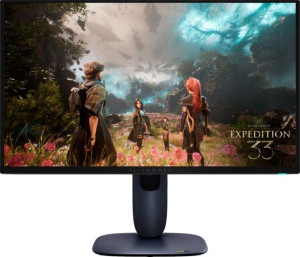
Dell Alienware AW2725Q 27"
Asus ROG Strix OLED XG27UCDMG 27"
VS
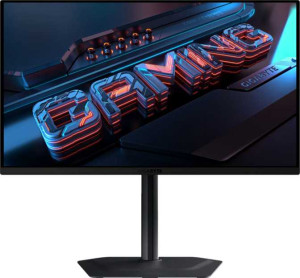
Gigabyte MO27U2 27"
Gigabyte MO27U2 27"
Asus ROG Strix OLED XG27UCDMG 27"
VS
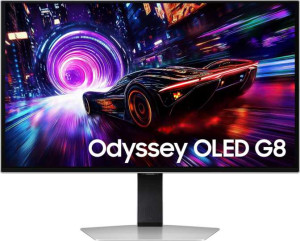
Samsung Odyssey OLED G8 (G81SF) 27"
Asus ROG Strix OLED XG27UCDMG 27"
VS
Asus ROG Swift OLED PG27UCDM 27"
Asus ROG Strix OLED XG27UCDMG 27"
VS
LG UltraGear OLED 27GX790A-B 27"
Asus ROG Strix OLED XG27UCDMG 27"
VS
Asus ROG Strix XG27ACMG 27"
Asus ROG Strix OLED XG27UCDMG 27"
VS
Gigabyte Aorus FO32U2P 32"
Asus ROG Strix OLED XG27UCDMG 27"
VS
MSI MAG 321UPX QD-OLED 32"
Asus ROG Strix OLED XG27UCDMG 27"
VS
Dell Alienware AW3225QF 32"
Asus ROG Strix OLED XG27UCDMG 27"
VS
MSI MPG 322URX QD-OLED 32"
Asus ROG Strix OLED XG27UCDMG 27"
VS
Sony Inzone M9 II 27"