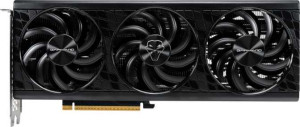
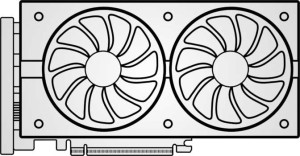
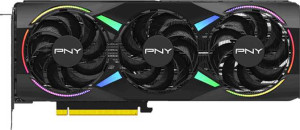
Gainward GeForce RTX 5070 Python III OC specifications and in-depth review

Gainward GeForce RTX 5070 Python III OC

Manufacturer: Gainward

The Gainward GeForce RTX 5070 Python III OC is a desktop graphics card based on NVIDIA's Blackwell architecture, manufactured on a 5 nm process node and housing 31,100 million transistors. It operates at a base clock of 2325 MHz with a boosted frequency of 2542 MHz, and its 6144 shading units are complemented by 192 texture mapping units and 80 render output units, delivering 31.24 TFLOPS of floating-point performance.

On the memory side, the card carries 12GB of GDDR7 VRAM across a 192-bit bus, reaching an effective speed of 28,000 MHz and a peak bandwidth of 672 GB/s. Connectivity includes one HDMI 2.1b port and three DisplayPort outputs for a total of four supported displays, while feature support covers DirectX 12 Ultimate, OpenGL 4.6, ray tracing, DLSS, Intel Resizable BAR, and RGB lighting. The card has a rated TDP of 250W and measures 291.9 mm in length by 116.5 mm in height.

Pros
  • Supports up to four displays simultaneously, making it suitable for multi-monitor setups
  • 12GB of GDDR7 VRAM with a 672 GB/s memory bandwidth supports demanding workloads
  • Ray tracing and DLSS are both enabled, expanding compatibility with modern rendering pipelines
  • ECC memory support adds data integrity for compute-oriented tasks
  • RGB lighting is built in, allowing visual customization without additional hardware
  • Intel Resizable BAR support allows the CPU to access the full GPU frame buffer, which can improve frame delivery
Cons
  • The 192-bit memory bus width is narrower than what some cards in this tier offer, potentially limiting memory throughput scaling
  • No USB-C output is available, which may require adapters for certain monitors or devices
  • Air-water hybrid cooling is not included, so thermal management relies entirely on the air cooling solution
  • With a 250W TDP, the card places a notable power demand on the system, requiring adequate PSU headroom
  • Only one HDMI port is provided, limiting options for users with multiple HDMI-dependent devices
Who is this for?

This card is well suited to users running demanding rendering and compute workloads that benefit from 12GB of GDDR7 VRAM, high memory bandwidth, and ECC memory support. Content creators, 3D artists, and developers working with GPU-accelerated applications will find the combination of 31.24 TFLOPS, DLSS support, and Double Precision Floating Point capability particularly relevant. The ability to drive up to four displays simultaneously also makes it a practical fit for productivity-focused setups or simulation environments requiring a wide desktop spread.

Who is this NOT for?

Users who require a compact or low-profile card for small form factor builds will find the 291.9 mm length and 116.5 mm height a limiting factor, as the dimensions demand a spacious chassis. The 250W TDP means systems with modest power supplies will need upgrading to accommodate the card reliably, making it a poor fit for those working within strict power consumption constraints. Additionally, users who depend on USB-C display output or need more than one HDMI connection for their monitor configuration will find the port selection restrictive without additional adapters or switching hardware.

Performance:

GPU clock speed 2325 MHz
GPU turbo 2542 MHz
pixel rate 203.4 GPixel/s
floating-point performance 31.24 TFLOPS
texture rate 488.1 GTexels/s
GPU memory speed 1750 MHz
shading units 6144
texture mapping units (TMUs) 192
render output units (ROPs) 80
Has Double Precision Floating Point (DPFP)

The Performance section of the Gainward GeForce RTX 5070 Python III OC centers on a base GPU clock of 2325 MHz that rises to 2542 MHz in turbo mode, supported by 6144 shading units, 192 texture mapping units, and 80 render output units. These figures translate into a texture rate of 488.1 GTexels/s, a pixel rate of 203.4 GPixel/s, and 31.24 TFLOPS of floating-point performance. Memory operations run at a GPU memory speed of 1750 MHz, and the card also supports Double Precision Floating Point (DPFP), broadening its suitability beyond standard rendering workloads.

Memory:

effective memory speed 28000 MHz
maximum memory bandwidth 672 GB/s
VRAM 12GB
GDDR version GDDR7
memory bus width 192-bit
Supports ECC memory

The card is equipped with 12GB of GDDR7 VRAM running across a 192-bit memory bus, reaching an effective memory speed of 28,000 MHz and delivering a maximum memory bandwidth of 672 GB/s. ECC memory support is also present, adding a layer of data integrity for workloads where memory accuracy is a consideration.

Features:

DirectX version DirectX 12 Ultimate
OpenGL version 4.6
OpenCL version 3
Supports multi-display technology
supports ray tracing
Supports 3D
supports DLSS
has XeSS (XMX)
AMD SAM / Intel Resizable BAR Intel Resizable BAR
has LHR
has RGB lighting
supported displays 4

The card supports DirectX 12 Ultimate, OpenGL 4.6, and OpenCL 3, covering a broad range of graphics and compute APIs. Ray tracing and DLSS are both supported, while XeSS (XMX) is not present. Multi-display technology is included, with support for up to four displays simultaneously, and stereoscopic 3D is also available. On the system side, Intel Resizable BAR is supported, though LHR is not in effect. RGB lighting is built in, rounding out the feature set.

Ports:

has an HDMI output
HDMI ports 1
HDMI version HDMI 2.1b
DisplayPort outputs 3
USB-C ports 0
DVI outputs 0
mini DisplayPort outputs 0

The card's output configuration consists of one HDMI 2.1b port and three DisplayPort outputs, providing a total of four display connections. There are no USB-C, DVI, or mini DisplayPort outputs on this model.

General info:

GPU architecture Blackwell
Thermal Design Power (TDP) 250W
PCI Express (PCIe) version 5
semiconductor size 5 nm
number of transistors 31100 million
Has air-water cooling
width 291.9 mm
height 116.5 mm

The Gainward GeForce RTX 5070 Python III OC is built on the Blackwell architecture, fabricated on a 5 nm process and integrating 31,100 million transistors. It connects via PCIe 5 and carries a rated TDP of 250W, relying solely on air cooling as no air-water hybrid cooling solution is included. The card measures 291.9 mm in width and 116.5 mm in height.
Final Verdict

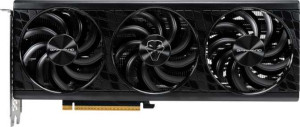
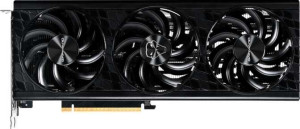
The Gainward GeForce RTX 5070 Python III OC is a well-specified graphics card that brings together the Blackwell architecture, DLSS and ray tracing support, and 12GB of GDDR7 VRAM with 672 GB/s of memory bandwidth into a package aimed at users who need reliable throughput for both rendering and compute tasks. Its multi-display capability, ECC memory support, and Double Precision Floating Point make it a credible choice beyond pure gaming scenarios. That said, the 250W TDP, absence of USB-C output, and sizeable physical footprint mean it demands a thoughtfully equipped system to deliver its full potential. For users whose setup can accommodate those requirements, the Python III OC represents a technically complete offering within its category.

Popular Comparisons

Gainward GeForce RTX 5070 Python III OC
VS
Gainward GeForce RTX 5060 Ti PythoN III OC 16GB
Gainward GeForce RTX 5070 Python III OC
VS
Gainward GeForce RTX 5070 Python III
Gainward GeForce RTX 5070 Python III OC
VS
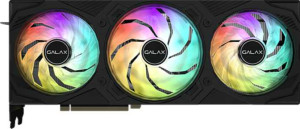
Galax GeForce RTX 5070 Ex Gamer 1-Click OC
Gainward GeForce RTX 5070 Python III OC
VS
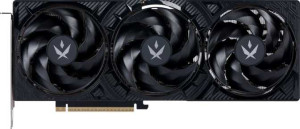
Galax GeForce RTX 5070 Fire
Gainward GeForce RTX 5070 Python III OC
VS
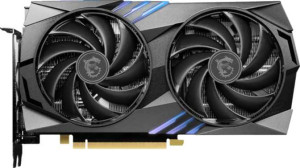
MSI GeForce RTX 4060 Ti Gaming X 16GB
Gainward GeForce RTX 5070 Python III OC
VS
Nvidia GeForce RTX 4070 Ti Super
Gainward GeForce RTX 5070 Python III OC
VS
PNY GeForce RTX 5070 ARGB Epic-X Triple Fan