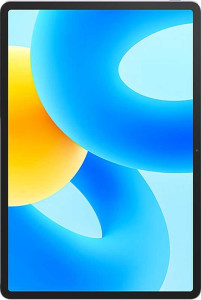
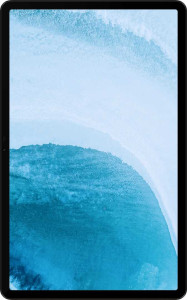
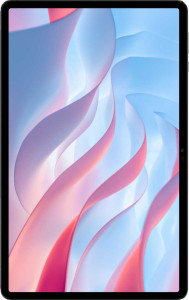
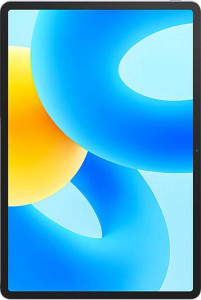
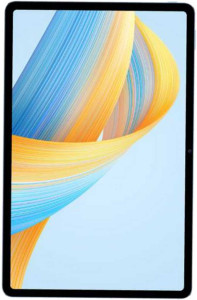
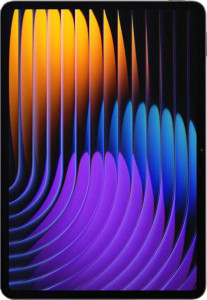
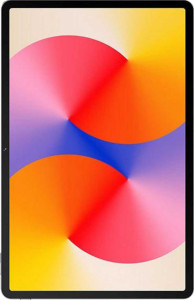
The Huawei MatePad 11.5 (2025) has a physical footprint of 260.9 x 176.8 mm with a thickness of just 6.9 mm, and it weighs 499 g, giving it a relatively slim profile for an 11.5-inch tablet. A stylus is included in the box, though it does not support tilt sensitivity. The tablet lacks a detachable or backlit keyboard, and it offers no water resistance rating.
The MatePad 11.5 (2025) features an 11.5″ IPS LCD touchscreen with a resolution of 2456 x 1600 pixels and a pixel density of 256 ppi, delivering a reasonably sharp visual experience for its size. The panel supports a 120Hz refresh rate, which contributes to smoother scrolling and more fluid on-screen interactions. It does not include branded damage-resistant glass, sapphire glass, or HDR10/HDR10+ support, and it is not an e-paper display.
The MatePad 11.5 (2025) is built around the Huawei HiSilicon Kirin 980, a 7 nm chipset with an octa-core CPU configuration running at 2 x 2.6, 2 x 1.92, and 4 x 1.8 GHz using big.LITTLE technology, paired with 8GB of RAM at 2133 MHz and 128GB of internal storage — with no external memory slot available. The Mali-G57 GPU runs at 720 MHz with a turbo frequency of 750 MHz, supports DirectX 12 and OpenGL ES 3.2 alongside OpenCL 1.2, and can drive up to two displays, backed by a maximum memory bandwidth of 31.78 GB/s across four memory channels. The chipset includes integrated LTE, integrated graphics, and ARM TrustZone security, supports 64-bit processing, but does not support ECC memory.
The MatePad 11.5 (2025) has a 13 MP rear camera capable of recording video at 1080p 30fps, complemented by an 8 MP front camera for video calls and selfies. The rear camera supports a range of manual controls including ISO, white balance, focus, and exposure, and also offers touch autofocus, continuous autofocus during video recording, and a built-in HDR mode. Neither the rear nor the front camera includes a flash of any kind, and the device lacks optical image stabilization, burst mode, panorama shooting, manual shutter speed control, and 3D recording capabilities.
The MatePad 11.5 (2025) includes stereo speakers and a dual-microphone setup, making it reasonably equipped for media playback and voice capture. It does not have a 3.5 mm headphone jack, so wired audio requires an adapter, and there is no built-in radio tuner.
The MatePad 11.5 (2025) is equipped with a 7700 mAh rechargeable battery that supports fast charging, and it includes a battery level indicator for keeping track of remaining charge. The battery is non-removable and does not support wireless charging.
The MatePad 11.5 (2025) supports Wi-Fi 6 (802.11ax) alongside Wi-Fi 4 and Wi-Fi 5, with theoretical download and upload speeds of 1400 Mbits/s and 200 Mbits/s respectively, and connects wirelessly via Bluetooth 5.0. It charges over USB Type-C at 40W, though the USB interface is version 2.0, and there is no HDMI output or Ethernet support. On the software side, the tablet offers split-screen multitasking, dark mode, widgets, customizable notifications, sharing intents, voice commands, a child lock, multi-user support, camera and microphone privacy controls, battery health check, and device position tracking, while the accelerometer is the only motion sensor present — there is no gyroscope or compass. The device lacks a cellular module, 5G support, GPS, NFC, a fingerprint scanner, an iris scanner, 3D facial recognition, an infrared sensor, and a built-in projector, and it does not receive direct OS updates from the vendor.
In Geekbench 5 benchmarks, the MatePad 11.5 (2025) scores 688 in the single-core test and 2407 in the multi-core test, reflecting the processing capability of its octa-core HiSilicon Kirin 980 chipset.