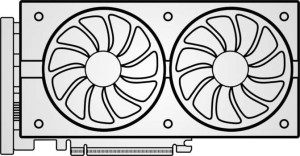
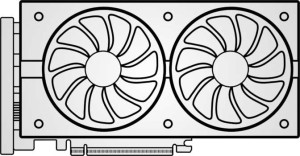
Nvidia RTX Pro 2000 Blackwell specifications and in-depth review

Nvidia RTX Pro 2000 Blackwell

Manufacturer: Nvidia

The Nvidia RTX Pro 2000 Blackwell is a workstation-class graphics card based on Nvidia's Blackwell architecture, fabricated on a 5 nm process and housing 21.9 billion transistors. It targets professional workloads that demand reliable precision, offering 16 GB of GDDR7 VRAM across a 128-bit memory bus, ECC memory support, and a modest 70 W thermal design power that keeps system integration straightforward in compact or power-constrained environments.

On the performance side, the card operates at a base clock of 790 MHz with a turbo frequency reaching 1950 MHz, translating to 16.97 TFLOPS of floating-point throughput and a texture rate of 265.2 GTexels/s. Its 288 GB/s memory bandwidth is delivered via an effective memory speed of 18000 MHz, while the 4352 shading units and 136 texture mapping units handle rendering workloads alongside full ray tracing and DLSS support. Connectivity is handled through four mini DisplayPort outputs, allowing up to four simultaneous displays, and the card connects to the host system over a PCIe 5 interface.

Pros
  • Supports ECC memory, which helps maintain data integrity in error-sensitive workloads
  • A 70W TDP allows the card to fit into systems with limited power headroom without requiring high-wattage connectors
  • 16 GB of GDDR7 VRAM with 288 GB/s bandwidth provides substantial memory capacity for data-heavy professional tasks
  • Four mini DisplayPort outputs allow simultaneous connection of up to four displays
  • DLSS and ray tracing support extend rendering capabilities for compatible applications
  • PCIe 5 interface ensures the card is compatible with current-generation platforms without bandwidth constraints
Cons
  • The 128-bit memory bus width limits scalability of memory bandwidth despite the fast GDDR7 memory type
  • No HDMI, standard DisplayPort, USB-C, or DVI outputs means display compatibility depends entirely on adapters or mini DisplayPort-native monitors
  • Does not include air-water cooling, so thermal management relies solely on the system environment
  • With only 64 ROPs, fill rate throughput may become a limiting factor in high-resolution rendering scenarios
Who is this for?

This card is well-suited to professionals who require reliable data integrity in their workflows, given its ECC memory support and GDDR7 VRAM at 16 GB — a combination that serves fields like scientific computing, simulation, and visualization where memory accuracy matters. Its 70 W TDP makes it a practical fit for compact workstations or thermally constrained builds where power budgets are tight, and the ability to drive four displays simultaneously suits users who depend on multi-monitor setups for tasks such as technical design or data monitoring. Double Precision Floating Point support further extends its relevance to compute-intensive professional applications that demand high numerical accuracy.

Who is this NOT for?

Users focused on high-throughput gaming or GPU rendering at high resolutions may find the 128-bit memory bus width a limiting factor, as it caps the scalability of memory bandwidth regardless of the underlying GDDR7 speed. The exclusive reliance on four mini DisplayPort outputs — with no HDMI, standard DisplayPort, USB-C, or DVI — creates friction for users whose displays or equipment do not natively support that connector type. Additionally, those looking for a card suited to graphics-intensive consumer gaming would find the feature set and output configuration misaligned with typical gaming peripherals and use case expectations.

Performance:

GPU clock speed 790 MHz
GPU turbo 1950 MHz
pixel rate 124.8 GPixel/s
floating-point performance 16.97 TFLOPS
texture rate 265.2 GTexels/s
GPU memory speed 1125 MHz
shading units 4352
texture mapping units (TMUs) 136
render output units (ROPs) 64
Has Double Precision Floating Point (DPFP)

The Performance section of the Nvidia RTX Pro 2000 Blackwell centers on a base GPU clock of 790 MHz that boosts up to a turbo frequency of 1950 MHz, enabling a floating-point throughput of 16.97 TFLOPS alongside a texture rate of 265.2 GTexels/s and a pixel rate of 124.8 GPixel/s. These figures are backed by 4352 shading units, 136 texture mapping units, and 64 render output units working in concert, while a GPU memory speed of 1125 MHz contributes to overall data throughput. The card also supports Double Precision Floating Point (DPFP), which broadens its suitability for workloads that require high numerical accuracy.

Memory:

effective memory speed 18000 MHz
maximum memory bandwidth 288 GB/s
VRAM 16GB
GDDR version GDDR7
memory bus width 128-bit
Supports ECC memory

The Nvidia RTX Pro 2000 Blackwell is equipped with 16 GB of GDDR7 VRAM running at an effective memory speed of 18000 MHz across a 128-bit bus, delivering a maximum memory bandwidth of 288 GB/s. The use of GDDR7 allows for efficient data throughput within the constraints of that bus width, and the card includes support for ECC memory, which enables error detection and correction — a relevant consideration for workloads where data integrity is a priority.

Features:

DirectX version DirectX 12 Ultimate
OpenGL version 4.6
OpenCL version 3
Supports multi-display technology
supports ray tracing
Supports 3D
supports DLSS
has XeSS (XMX)
AMD SAM / Intel Resizable BAR Intel Resizable BAR
has LHR
has RGB lighting
supported displays 4

The Nvidia RTX Pro 2000 Blackwell supports DirectX 12 Ultimate, OpenGL 4.6, and OpenCL 3, covering a broad range of graphics and compute APIs. It includes hardware-accelerated ray tracing, DLSS, and stereoscopic 3D support, and can drive up to four displays simultaneously through its multi-display technology. Intel Resizable BAR is supported, allowing the CPU broader access to GPU memory, while XeSS (XMX), LHR, and RGB lighting are not present on this card.

Ports:

has an HDMI output
DisplayPort outputs 0
USB-C ports 0
DVI outputs 0
mini DisplayPort outputs 4

The Nvidia RTX Pro 2000 Blackwell's output configuration consists entirely of four mini DisplayPort outputs, with no HDMI, standard DisplayPort, USB-C, or DVI ports present on the card.

General info:

GPU architecture Blackwell
Thermal Design Power (TDP) 70W
PCI Express (PCIe) version 5
semiconductor size 5 nm
number of transistors 21900 million
Has air-water cooling
width 167.6 mm
height 68.6 mm

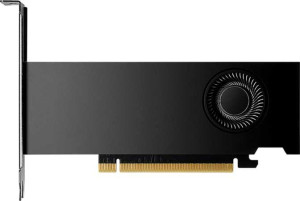
The Nvidia RTX Pro 2000 Blackwell is built on the Blackwell GPU architecture using a 5 nm semiconductor process, integrating 21,900 million transistors into a card measuring 167.6 mm wide and 68.6 mm tall. It connects to the host system via PCIe 5 and carries a thermal design power of 70 W, with cooling handled without an air-water solution. The card does not include air-water cooling.
Final Verdict

The Nvidia RTX Pro 2000 Blackwell is a focused professional graphics card that makes deliberate trade-offs in favor of reliability and workstation suitability. Its 16 GB of GDDR7 VRAM with ECC support, combined with a power-efficient 70 W TDP and Double Precision Floating Point capability, position it clearly within professional compute and visualization environments rather than general-purpose or consumer use. The connectivity choices and memory bus width reflect a card designed for a specific operational context, and users working within those parameters will find the specification set coherent and purposeful. For professionals who need accurate computation, multi-display flexibility, and a thermally manageable card on a modern PCIe 5 platform, the RTX Pro 2000 Blackwell represents a well-defined option aligned with its intended workstation market.

Popular Comparisons

Nvidia RTX Pro 2000 Blackwell
VS
Nvidia RTX 2000 ADA Generation
Nvidia RTX Pro 2000 Blackwell
VS
Nvidia RTX 500 Ada Generation Laptop
Nvidia RTX Pro 2000 Blackwell
VS
Nvidia GeForce RTX 5070 Laptop
Nvidia RTX Pro 2000 Blackwell
VS
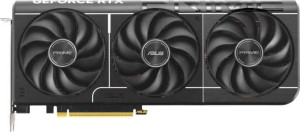
Asus Prime GeForce RTX 5070
Nvidia RTX Pro 2000 Blackwell
VS
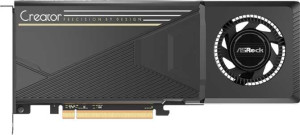
ASRock Radeon AI Pro R9700 Creator
Nvidia RTX Pro 2000 Blackwell
VS
Nvidia RTX 1000 Ada Generation Laptop
Nvidia RTX Pro 2000 Blackwell
VS
Nvidia RTX 4000 Ada Generation