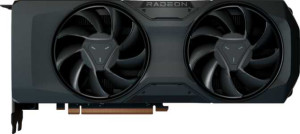
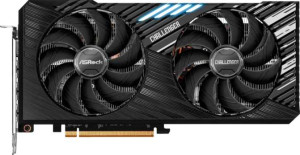
AMD Radeon RX 9070 specifications and in-depth review

AMD Radeon RX 9070

Manufacturer: AMD

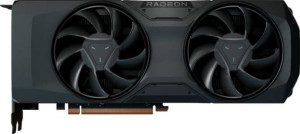
The AMD Radeon RX 9070 is a desktop graphics card based on AMD's RDNA 4.0 architecture, manufactured using a 5 nm process with 53,900 million transistors. It operates at a base clock of 1330 MHz and boosts up to 2520 MHz, delivering 36.1 TFLOPS of floating-point performance through its 3584 shading units and 224 texture mapping units.

On the memory side, the card carries 16GB of GDDR6 VRAM across a 256-bit bus, reaching an effective speed of 20,000 MHz and a maximum bandwidth of 640 GB/s. It supports DirectX 12 Ultimate, OpenGL 4.6, ray tracing, AMD FSR4, and AMD SAM, with a thermal design power of 220W. Display connectivity includes one HDMI 2.1a port and three DisplayPort outputs, supporting up to four monitors simultaneously.

Pros
  • Supports up to four displays simultaneously, offering flexible multi-monitor setups
  • Comes with 16GB of GDDR6 VRAM across a 256-bit bus, providing substantial frame buffer capacity for demanding workloads
  • Hardware ray tracing support is included, enabling more realistic lighting and shadow rendering
  • FSR4 upscaling is supported, allowing for higher frame rates at increased resolutions
  • ECC memory support adds a layer of data integrity protection, useful in compute-oriented tasks
  • PCIe 5.0 interface ensures the card is compatible with the latest motherboard platforms
Cons
  • A 220W TDP places meaningful demands on system power delivery and case airflow
  • No USB-C display output is available, limiting connectivity options for certain modern monitors
  • Does not include integrated air-water cooling, so thermal management depends entirely on the card's own air cooler
  • XeSS (XMX) upscaling is not supported, restricting upscaling options to AMD's own FSR4
  • No DVI or mini DisplayPort outputs are present, which may require adapters in legacy display setups
Who is this for?

This card is well-suited for users who work across multi-monitor setups, as it can drive up to four displays simultaneously through its HDMI 2.1a and three DisplayPort outputs. Its 16GB of GDDR6 VRAM combined with a 640 GB/s memory bandwidth makes it a capable choice for those engaged in GPU-accelerated compute tasks such as 3D rendering or simulation workloads, particularly given the inclusion of ECC memory and Double Precision Floating Point support. Gamers and creators who want to leverage hardware ray tracing and FSR4 upscaling will also find the feature set well-aligned with modern rendering pipelines.

Who is this NOT for?

Users working in highly compact or thermally constrained builds may find the 220W TDP and 267 mm card length a limiting factor, as the card requires adequate case space and airflow without offering an integrated air-water cooling option. Those dependent on USB-C display connectivity or legacy DVI outputs will need to rely on adapters, which may be inconvenient in professional or specialized display environments. Additionally, users who prefer or require XeSS (XMX) upscaling — rather than AMD's FSR4 — will find that capability absent on this card.

Performance:

GPU clock speed 1330 MHz
GPU turbo 2520 MHz
pixel rate 322.6 GPixel/s
floating-point performance 36.1 TFLOPS
texture rate 564.5 GTexels/s
GPU memory speed 2518 MHz
shading units 3584
texture mapping units (TMUs) 224
render output units (ROPs) 128
Has Double Precision Floating Point (DPFP)

The AMD Radeon RX 9070 runs at a base clock of 1330 MHz, boosting up to 2520 MHz under load, while GPU memory operates at 2518 MHz. Its 3584 shading units work alongside 224 texture mapping units and 128 render output units to deliver a texture rate of 564.5 GTexels/s and a pixel rate of 322.6 GPixel/s. Overall floating-point performance reaches 36.1 TFLOPS, and the card also supports Double Precision Floating Point (DPFP).

Memory:

effective memory speed 20000 MHz
maximum memory bandwidth 640 GB/s
VRAM 16GB
GDDR version GDDR6
memory bus width 256-bit
Supports ECC memory

The AMD Radeon RX 9070 is equipped with 16GB of GDDR6 VRAM running across a 256-bit memory bus, reaching an effective memory speed of 20,000 MHz and a peak bandwidth of 640 GB/s. The card also supports ECC memory, which helps maintain data integrity during operation.

Features:

DirectX version DirectX 12 Ultimate
OpenGL version 4.6
OpenCL version 2.2
Supports multi-display technology
supports ray tracing
Supports 3D
has FSR4
has XeSS (XMX)
AMD SAM / Intel Resizable BAR AMD SAM
has LHR
has RGB lighting
supported displays 4

The AMD Radeon RX 9070 supports DirectX 12 Ultimate, OpenGL 4.6, and OpenCL 2.2, covering a broad range of graphics and compute workloads. It includes hardware ray tracing, stereoscopic 3D, and AMD FSR4 for upscaling, while XeSS (XMX) is not supported. The card supports up to four displays simultaneously via multi-display technology and includes AMD SAM (Smart Access Memory) for optimized CPU-GPU data throughput. LHR (Lite Hash Rate) is not present, and the card does not feature RGB lighting.

Ports:

has an HDMI output
HDMI ports 1
HDMI version HDMI 2.1a
DisplayPort outputs 3
USB-C ports 0
DVI outputs 0
mini DisplayPort outputs 0

The AMD Radeon RX 9070 offers a total of four video outputs: one HDMI 2.1a port and three DisplayPort outputs. There are no USB-C, DVI, or mini DisplayPort connections on this card.

General info:

GPU architecture RDNA 4.0
Thermal Design Power (TDP) 220W
PCI Express (PCIe) version 5
semiconductor size 5 nm
number of transistors 53900 million
Has air-water cooling
width 267 mm
height 111 mm

The AMD Radeon RX 9070 is built on the RDNA 4.0 architecture using a 5 nm manufacturing process, integrating 53,900 million transistors onto the die. It connects via PCIe 5.0 and carries a thermal design power of 220W. The card measures 267 mm in width and 111 mm in height, and does not include an integrated air-water cooling solution.
Final Verdict

The AMD Radeon RX 9070 presents a well-rounded specification sheet for users who demand both rendering capability and compute versatility. Built on the RDNA 4.0 architecture with a 5 nm process, it brings together hardware ray tracing, FSR4 upscaling, and ECC memory support under a feature set oriented toward modern workloads. Its 16GB of GDDR6 VRAM paired with 640 GB/s of memory bandwidth gives it the headroom to handle demanding graphical and GPU-compute scenarios with confidence. Prospective users should account for its 220W power draw and physical dimensions when planning a build, and note the absence of USB-C display output. Overall, the RX 9070 is a technically capable card that fits well into both gaming and creator-oriented systems where multi-display flexibility and up-to-date API support are priorities.

Popular Comparisons

AMD Radeon RX 9070
AMD Radeon RX 9070
VS
AMD Radeon RX 7700 XT
AMD Radeon RX 9070
AMD Radeon RX 9070
VS
AMD Radeon RX 7800 XT
AMD Radeon RX 9070
AMD Radeon RX 9070
VS
Palit GeForce RTX 5050 Dual OC
AMD Radeon RX 9070
AMD Radeon RX 9070
VS
AMD Radeon RX 9070 GRE
AMD Radeon RX 9070
AMD Radeon RX 9070
VS
Asus Prime GeForce RTX 5060 Ti 16GB
AMD Radeon RX 9070
AMD Radeon RX 9070
VS
Zotac Gaming GeForce RTX 5070 Ti Solid SFF
AMD Radeon RX 9070
AMD Radeon RX 9070
VS
PowerColor Radeon RX 7800 XT
AMD Radeon RX 9070
AMD Radeon RX 9070
VS
PowerColor Radeon RX 7700 XT
AMD Radeon RX 9070
AMD Radeon RX 9070
VS
AMD Radeon RX 9070 XT
AMD Radeon RX 9070
AMD Radeon RX 9070
VS
ASRock Radeon RX 7900 GRE Challenger OC
AMD Radeon RX 9070
AMD Radeon RX 9070
VS
Nvidia GeForce RTX 4070 Ti Super
AMD Radeon RX 9070
AMD Radeon RX 9070
VS
Nvidia GeForce RTX 5070 Ti