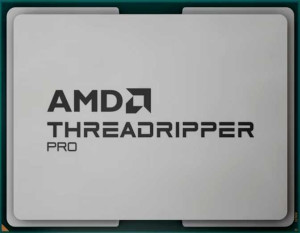
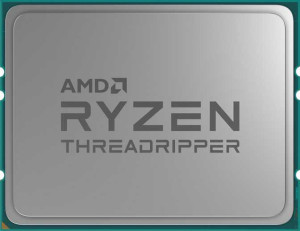
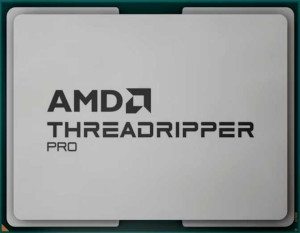
The AMD Ryzen Threadripper Pro 9955WX is a desktop processor built on a 4 nm semiconductor process, with no integrated graphics included. It carries a Thermal Design Power (TDP) of 350W and is rated for a maximum CPU temperature of 95°C, reflecting its workstation-grade thermal envelope. The chip supports 64-bit computing and communicates with the platform through PCIe 5.0, enabling high-bandwidth connectivity with compatible motherboards and expansion devices.
The processor runs 16 cores at a base speed of 4.5 GHz each, supporting 32 threads in total, and can reach a turbo clock speed of 5.4 GHz under boost conditions. The clock multiplier is set to 45 and the chip features an unlocked multiplier, allowing for manual frequency adjustments. Cache is arranged across three levels: 1280 KB of L1, 16 MB of L2 at 1 MB per core, and 64 MB of L3 at 4 MB per core. The processor does not use big.LITTLE heterogeneous core architecture, meaning all cores share a uniform design.
In PassMark testing, the processor achieves a multi-threaded score of 69,993, reflecting its capacity to handle heavily parallelized workloads across all cores and threads. The single-threaded PassMark result stands at 4,561, indicating per-core execution performance for tasks that rely on a single thread at a time.
The processor supports DDR5 memory across eight independent channels, enabling substantial memory bandwidth for data-intensive workloads. RAM speeds of up to 6400 MHz are supported, and the platform can address a maximum of 2000 GB of total system memory. ECC memory is also supported, providing error-correction capability that helps maintain data integrity in reliability-sensitive environments.
The processor supports multithreading, allowing each core to handle multiple threads simultaneously for improved throughput in parallel workloads. It includes the NX bit for hardware-level memory protection, helping to prevent certain classes of malicious code execution. On the instruction set side, the chip supports a broad extension suite including AVX, AVX2, FMA3, AES, F16C, MMX, SSE 4.1, and SSE 4.2, covering vectorized math, encrypted data processing, and a range of multimedia and floating-point operations.