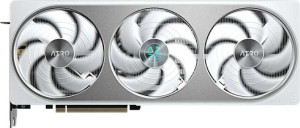
Gigabyte GeForce RTX 5060 Ti Aero OC 16GB specifications and in-depth review

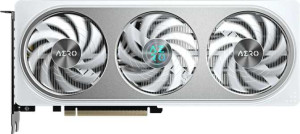
Gigabyte GeForce RTX 5060 Ti Aero OC 16GB

Manufacturer: Gigabyte

The Gigabyte GeForce RTX 5060 Ti Aero OC is a desktop graphics card based on NVIDIA's Blackwell architecture, manufactured on a 5 nm process with 21,900 million transistors. It carries a 180W TDP and measures 281 mm in length and 117 mm in height, fitting within a range of mid-tower and full-tower cases. The card includes 16GB of GDDR7 VRAM across a 128-bit memory bus, delivering an effective memory speed of 28,000 MHz and a maximum bandwidth of 448 GB/s.

On the compute side, the RTX 5060 Ti Aero OC is equipped with 4,608 shading units, 144 texture mapping units, and 48 render output units, producing a texture rate of 381.2 GTexels/s and 24.39 TFLOPS of floating-point performance. The GPU runs at a base clock of 2,407 MHz with a turbo frequency of 2,647 MHz. It supports DirectX 12 Ultimate, OpenGL 4.6, OpenCL 3, ray tracing, and DLSS, and can drive up to four displays simultaneously through its three DisplayPort 1.4 outputs and one HDMI 2.1b port. Intel Resizable BAR support is included, along with ECC memory compatibility and RGB lighting.

Pros
  • Equipped with 16GB of GDDR7 VRAM, providing a substantial framebuffer for memory-intensive workloads and high-resolution textures
  • Effective memory speed of 28,000 MHz and 448 GB/s bandwidth support fast data throughput across rendering and compute tasks
  • Supports ray tracing and DLSS, enabling hardware-accelerated lighting and AI-driven rendering capabilities
  • Can drive up to four displays simultaneously through three DisplayPort outputs and one HDMI 2.1b port
  • RGB lighting is included on the card, offering visual customization within a build
  • ECC memory support adds a layer of data integrity for users running precision-sensitive compute tasks
Cons
  • 128-bit memory bus width is narrow for a card with 16GB of VRAM, which can limit memory bandwidth scaling in certain scenarios
  • Does not support water cooling, limiting thermal management options for users in small or thermally constrained enclosures
  • No USB-C output is available, which may be a limitation for users with USB-C displays or VR headsets that use that connection
  • XeSS (XMX) is not supported, restricting upscaling options to DLSS only
Who is this for?

This card is well-suited to users who prioritize high-resolution gaming and content creation, as the 16GB of GDDR7 VRAM and 448 GB/s of memory bandwidth provide ample headroom for texture-heavy workloads and large assets. The support for ray tracing, DLSS, and DirectX 12 Ultimate makes it a practical fit for those working with modern rendering pipelines or playing titles that rely on these technologies. Users needing a multi-monitor setup will also find the four-display output useful, and the inclusion of ECC memory support extends its appeal to those running compute or data-integrity-sensitive tasks alongside standard graphics workloads.

Who is this NOT for?

Users who require extensive memory bandwidth scaling may find the 128-bit bus width a limiting factor, particularly in workloads that push large amounts of data across the memory interface simultaneously. The card is also not well-suited to those working in thermally constrained environments who rely on liquid cooling solutions, as water cooling is not supported. Additionally, users who depend on USB-C display connectivity — such as those using certain monitors or VR headsets that require that output — will find no such port available on this card.

Performance:

GPU clock speed 2407 MHz
GPU turbo 2647 MHz
pixel rate 127.1 GPixel/s
floating-point performance 24.39 TFLOPS
texture rate 381.2 GTexels/s
GPU memory speed 1750 MHz
shading units 4608
texture mapping units (TMUs) 144
render output units (ROPs) 48
Has Double Precision Floating Point (DPFP)

The GPU operates at a base clock of 2,407 MHz, reaching a turbo frequency of 2,647 MHz under load. It is backed by 4,608 shading units, 144 texture mapping units, and 48 render output units, translating into a texture rate of 381.2 GTexels/s and a pixel rate of 127.1 GPixel/s. Overall floating-point throughput sits at 24.39 TFLOPS, while the memory runs at 1,750 MHz. The card also supports Double Precision Floating Point (DPFP), broadening its suitability for compute-oriented workloads alongside standard rendering tasks.

Memory:

effective memory speed 28000 MHz
maximum memory bandwidth 448 GB/s
VRAM 16GB
GDDR version GDDR7
memory bus width 128-bit
Supports ECC memory

The card is equipped with 16GB of GDDR7 VRAM running across a 128-bit memory bus at an effective speed of 28,000 MHz, resulting in a maximum memory bandwidth of 448 GB/s. ECC memory support is also included, which helps detect and correct memory errors in workloads where data integrity is a priority.

Features:

DirectX version DirectX 12 Ultimate
OpenGL version 4.6
OpenCL version 3
Supports multi-display technology
supports ray tracing
Supports 3D
supports DLSS
has XeSS (XMX)
AMD SAM / Intel Resizable BAR Intel Resizable BAR
has LHR
has RGB lighting
supported displays 4

The card supports DirectX 12 Ultimate, OpenGL 4.6, and OpenCL 3, covering a broad range of graphics and compute APIs. Ray tracing and DLSS are both supported, while XeSS (XMX) is not available on this card. It is compatible with Intel Resizable BAR and does not include LHR. Multi-display output is supported across up to four displays simultaneously, and stereoscopic 3D is also available. RGB lighting is present on the card itself.

Ports:

has an HDMI output
HDMI ports 1
HDMI version HDMI 2.1b
DisplayPort outputs 3
USB-C ports 0
DVI outputs 0
mini DisplayPort outputs 0

The card's output configuration consists of three DisplayPort outputs and one HDMI 2.1b port, totaling four display connections. There are no DVI, mini DisplayPort, or USB-C outputs present on this model.

General info:

GPU architecture Blackwell
Thermal Design Power (TDP) 180W
PCI Express (PCIe) version 5
semiconductor size 5 nm
number of transistors 21900 million
Has air-water cooling
width 281 mm
height 117 mm

Built on the Blackwell architecture and fabricated using a 5 nm process, the GPU integrates 21,900 million transistors and connects via PCIe 5. It carries a Thermal Design Power of 180W and relies on air cooling, with no water-cooling support included. The card measures 281 mm in width and 117 mm in height.
Final Verdict

The Gigabyte GeForce RTX 5060 Ti Aero OC brings together a well-rounded set of specifications for users looking to run modern workloads on the Blackwell architecture, with its 16GB of GDDR7 VRAM standing out as a notable asset for texture-heavy rendering and memory-intensive tasks. Ray tracing, DLSS, DirectX 12 Ultimate, and four-display output round out a feature set that covers the needs of both gaming and light compute use cases. The 128-bit bus width and absence of water-cooling support are worth keeping in mind depending on the intended environment, but within its design scope the card delivers a coherent package. For users whose workflows align with its strengths, it represents a capable and technically well-specified option in the graphics card category.

Popular Comparisons

Gigabyte GeForce RTX 5060 Ti Aero OC 16GB
VS
Asus Prime GeForce RTX 5070
Gigabyte GeForce RTX 5060 Ti Aero OC 16GB
VS
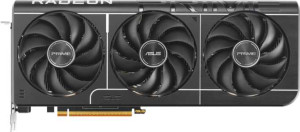
Asus Prime Radeon RX 9070 OC Edition
Gigabyte GeForce RTX 5060 Ti Aero OC 16GB
VS
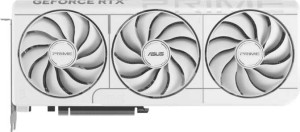
Asus Prime GeForce RTX 5070 White OC Edition
Gigabyte GeForce RTX 5060 Ti Aero OC 16GB
VS
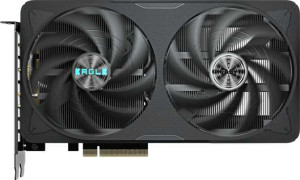
Gigabyte GeForce RTX 5060 Ti Eagle OC 16GB
Gigabyte GeForce RTX 5060 Ti Aero OC 16GB
VS
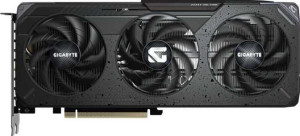
Gigabyte GeForce RTX 5060 Ti Gaming OC 16GB
Gigabyte GeForce RTX 5060 Ti Aero OC 16GB
VS
MSI GeForce RTX 5070 Ti Inspire 3X OC Plus
Gigabyte GeForce RTX 5060 Ti Aero OC 16GB
VS
Gigabyte GeForce RTX 5070 Aero OC
Gigabyte GeForce RTX 5060 Ti Aero OC 16GB
VS
Nvidia GeForce RTX 5060 Ti 8GB