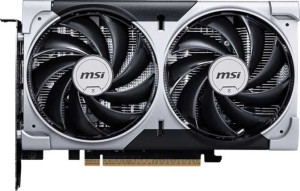
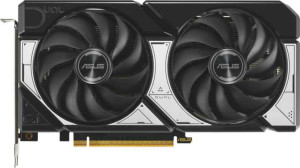
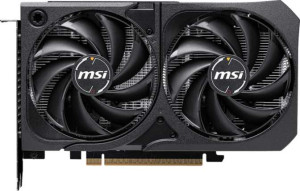
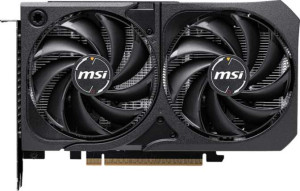
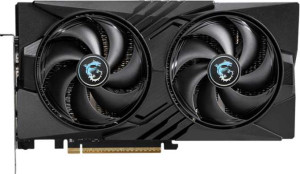
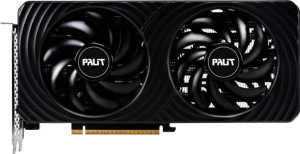
MSI GeForce RTX 5060 Ventus 2X OC specifications and in-depth review

MSI GeForce RTX 5060 Ventus 2X OC

Manufacturer: MSI

The MSI GeForce RTX 5060 Ventus 2X OC is a mid-range graphics card built on NVIDIA's Blackwell architecture, manufactured using a 5nm process and packed with 21.9 billion transistors. It ships with 8GB of GDDR7 VRAM across a 128-bit memory bus, delivering an effective memory speed of 28000 MHz and up to 448 GB/s of bandwidth — figures that reflect a modern, efficient memory subsystem for its class. The card runs at a base clock of 2280 MHz, boosting up to 2527 MHz under load, and fits into a compact 197 × 120 mm form factor drawing 145W through its PCIe 5.0 interface.

On the feature side, the RTX 5060 Ventus 2X OC supports DirectX 12 Ultimate alongside OpenGL 4.6 and OpenCL 3, and includes hardware-accelerated ray tracing and DLSS support. Its 3840 shading units are complemented by 120 texture mapping units and 48 ROPs, resulting in a texture rate of 303.2 GTexels/s and a pixel fill rate of 121.3 GPixel/s, with overall floating-point throughput rated at 19.41 TFLOPS. Display connectivity spans four outputs — one HDMI 2.1b port and three DisplayPort connections — with no USB-C output present. Intel Resizable BAR is supported, and ECC memory is available, though the card ships without RGB lighting or liquid cooling provisions.

Pros
  • Supports up to four displays simultaneously through a combination of one HDMI 2.1b and three DisplayPort outputs
  • GDDR7 memory delivers an effective speed of 28000 MHz and 448 GB/s of bandwidth across a 128-bit bus
  • Hardware ray tracing and DLSS are both supported, enabling access to modern rendering features
  • ECC memory support adds data integrity protection useful for compute-oriented workloads
  • The 197 x 120 mm footprint is relatively compact, making it easier to fit in smaller cases
  • PCIe 5.0 connectivity ensures compatibility with current-generation platforms
Cons
  • The 128-bit memory bus is narrow for the class, which can limit memory throughput in bandwidth-intensive scenarios
  • Only 8GB of VRAM is provided, which may be restrictive for high-resolution or memory-heavy workloads
  • No USB-C output is available, limiting connectivity options for certain monitors and devices
  • RGB lighting is absent, offering no visual customization for users who want it
  • Liquid cooling is not supported, leaving thermal management entirely dependent on the air cooler
Who is this for?

This card is a practical fit for users running games or applications at 1080p or 1440p resolutions, where its GDDR7 memory with 448 GB/s of bandwidth and hardware-accelerated ray tracing can be put to effective use. The compact 197 x 120 mm dimensions make it a sensible choice for smaller form-factor builds, and support for up to four displays makes it workable for multi-monitor setups. Users with compute workloads that benefit from ECC memory or OpenCL 3 support will also find it technically capable in those scenarios.

Who is this NOT for?

Users targeting 4K gaming or highly memory-intensive workloads may find the 8GB VRAM ceiling and 128-bit memory bus limiting, as demanding titles and creative applications at higher resolutions can exhaust available memory headroom. The card is equally unsuitable for users who require USB-C display connectivity, since no such output is present. Those seeking a fully customizable aesthetic setup will also be disappointed, as there is no RGB lighting on this model.

Performance:

GPU clock speed 2280 MHz
GPU turbo 2527 MHz
pixel rate 121.3 GPixel/s
floating-point performance 19.41 TFLOPS
texture rate 303.2 GTexels/s
GPU memory speed 1750 MHz
shading units 3840
texture mapping units (TMUs) 120
render output units (ROPs) 48
Has Double Precision Floating Point (DPFP)

The MSI GeForce RTX 5060 Ventus 2X OC operates at a base GPU clock of 2280 MHz, rising to a boost speed of 2527 MHz under load, while GPU memory runs at 1750 MHz. Its 3840 shading units work alongside 120 texture mapping units and 48 render output units, producing a texture rate of 303.2 GTexels/s and a pixel fill rate of 121.3 GPixel/s. Floating-point throughput reaches 19.41 TFLOPS, giving the card solid compute capability for its class, and Double Precision Floating Point (DPFP) is supported for workloads that require it.

Memory:

effective memory speed 28000 MHz
maximum memory bandwidth 448 GB/s
VRAM 8GB
GDDR version GDDR7
memory bus width 128-bit
Supports ECC memory

The card is equipped with 8GB of GDDR7 VRAM running across a 128-bit memory bus, with an effective memory speed of 28000 MHz and a maximum bandwidth of 448 GB/s. ECC memory is supported, adding a layer of data integrity protection for workloads that benefit from error correction.

Features:

DirectX version DirectX 12 Ultimate
OpenGL version 4.6
OpenCL version 3
Supports multi-display technology
supports ray tracing
Supports 3D
supports DLSS
has XeSS (XMX)
AMD SAM / Intel Resizable BAR Intel Resizable BAR
has LHR
has RGB lighting
supported displays 4

The MSI GeForce RTX 5060 Ventus 2X OC supports DirectX 12 Ultimate, OpenGL 4.6, and OpenCL 3, covering a broad range of modern graphics and compute APIs. Hardware-accelerated ray tracing and DLSS are both included, along with stereoscopic 3D and multi-display support for up to four screens simultaneously. Intel Resizable BAR is supported to help improve data throughput between the CPU and GPU, while XeSS (XMX) and LHR are not present on this card. RGB lighting is absent, keeping the aesthetic understated.

Ports:

has an HDMI output
HDMI ports 1
HDMI version HDMI 2.1b
DisplayPort outputs 3
USB-C ports 0
DVI outputs 0
mini DisplayPort outputs 0

The card's output configuration consists of one HDMI 2.1b port and three DisplayPort outputs, providing a total of four display connections. There are no USB-C, DVI, or mini DisplayPort outputs on this model.

General info:

GPU architecture Blackwell
Thermal Design Power (TDP) 145W
PCI Express (PCIe) version 5
semiconductor size 5 nm
number of transistors 21900 million
Has air-water cooling
width 197 mm
height 120 mm

Built on the Blackwell architecture and fabricated using a 5nm process, the card integrates 21,900 million transistors and connects via a PCIe 5.0 interface. It carries a Thermal Design Power rating of 145W and measures 197mm wide by 120mm tall, making it a relatively compact design. Cooling is handled exclusively by air — there is no liquid cooling option on this model.

Final Verdict

The MSI GeForce RTX 5060 Ventus 2X OC is a focused graphics card built around NVIDIA's Blackwell architecture, bringing together a modern feature set — including hardware ray tracing, DLSS, and GDDR7 memory with 448 GB/s of bandwidth — in a compact, no-frills form factor. Its strengths lie in efficient memory technology, broad API support, and a four-display output configuration that suits multi-monitor use cases. At the same time, the 8GB VRAM ceiling and 128-bit bus place natural limits on how far it can be pushed in memory-heavy scenarios. For users building a capable 1080p or 1440p system in a smaller chassis, and who prioritize modern rendering features over raw memory capacity, this card represents a technically well-rounded option within its intended scope.

Popular Comparisons

MSI GeForce RTX 5060 Ventus 2X OC
VS
Asus Dual GeForce RTX 5060
MSI GeForce RTX 5060 Ventus 2X OC
VS
MSI GeForce RTX 5060 Shadow 2X
MSI GeForce RTX 5060 Ventus 2X OC
VS
MSI GeForce RTX 5060 Shadow 2X OC
MSI GeForce RTX 5060 Ventus 2X OC
VS
MSI GeForce RTX 5060 Gaming OC
MSI GeForce RTX 5060 Ventus 2X OC
VS
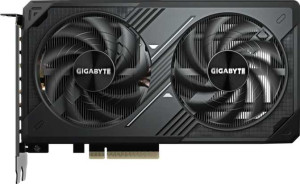
Gigabyte GeForce RTX 5060 WindForce
MSI GeForce RTX 5060 Ventus 2X OC
VS
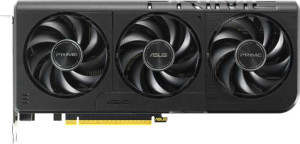
Asus Prime GeForce RTX 5060
MSI GeForce RTX 5060 Ventus 2X OC
VS
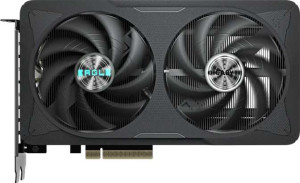
Gigabyte GeForce RTX 5060 Eagle OC
MSI GeForce RTX 5060 Ventus 2X OC
VS
Gigabyte GeForce RTX 5060 Gaming OC
MSI GeForce RTX 5060 Ventus 2X OC
VS
Gigabyte GeForce RTX 5060 Aero OC
MSI GeForce RTX 5060 Ventus 2X OC
VS
Yeston Cute Pet GeForce RTX 5060
MSI GeForce RTX 5060 Ventus 2X OC
VS
Nvidia GeForce RTX 5060 Ti 8GB
MSI GeForce RTX 5060 Ventus 2X OC
VS
Palit GeForce RTX 5060 Dual