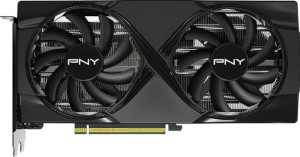
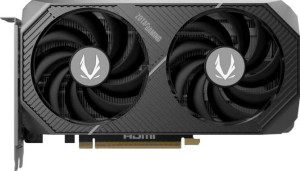
PNY GeForce RTX 5060 Ti Dual Fan 16GB specifications and in-depth review

PNY GeForce RTX 5060 Ti Dual Fan 16GB

Manufacturer: PNY

The PNY GeForce RTX 5060 Ti Dual Fan is a graphics card from PNY based on NVIDIA's Blackwell architecture, manufactured using a 5 nm process with 21,900 million transistors. It operates at a base clock of 2407 MHz and reaches a boost of 2572 MHz, delivering 23.7 TFLOPS of floating-point performance. The card measures 245 mm in length and 120 mm in height, fits within a 180W TDP envelope, and carries a three-year warranty.

On the memory side, the card is equipped with 16GB of GDDR7 running at an effective speed of 28,000 MHz across a 128-bit bus, yielding up to 448 GB/s of bandwidth, with ECC support included. It provides 4,608 shading units, 144 TMUs, and 48 ROPs, alongside a texture rate of 370.4 GTexels/s and a pixel rate of 123.5 GPixel/s. Connectivity includes one HDMI 2.1b port and three DisplayPort outputs, supporting up to four displays simultaneously. The card supports DirectX 12 Ultimate, OpenGL 4.6, OpenCL 3, ray tracing, DLSS, and Intel Resizable BAR, and connects via PCIe 5.

Pros
  • 16GB of GDDR7 VRAM with a 448 GB/s bandwidth ceiling gives the card substantial memory capacity and throughput for memory-intensive workloads
  • Support for ray tracing and DLSS together enables more realistic rendering with AI-assisted upscaling
  • Four simultaneous display outputs accommodate multi-monitor setups without additional hardware
  • HDMI 2.1b and three full-size DisplayPort outputs cover a wide range of modern monitor connectivity without needing adapters
  • ECC memory support adds a layer of data reliability for compute and professional tasks
  • A 180W TDP keeps power draw relatively contained for a card with this level of specification
Cons
  • The 128-bit memory bus width is narrow for a card carrying 16GB of VRAM, which can limit sustained memory throughput in bandwidth-sensitive scenarios
  • No USB-C display output limits compatibility with certain modern monitors and portable displays that rely on that connector
  • Air cooling only, with no water-cooling option, may restrict thermal headroom in compact or poorly ventilated cases
  • Absence of RGB lighting offers no visual customization for users who prioritize aesthetics in their build
Who is this for?

This card is well-suited for users who prioritize high-resolution gaming and content creation, where 16GB of GDDR7 VRAM and a 448 GB/s bandwidth ceiling provide meaningful headroom for texture-heavy workloads. The combination of ray tracing support, DLSS, and DirectX 12 Ultimate makes it a solid fit for those running graphically demanding titles that benefit from hardware-accelerated lighting and AI upscaling. It also works well for users running multi-monitor setups, given its four simultaneous display outputs, and for those with compute-oriented needs, thanks to Double Precision Floating Point and ECC memory support.

Who is this NOT for?

Users who require sustained high-bandwidth memory throughput for very demanding workloads may find the 128-bit memory bus a limiting factor, as it constrains effective bandwidth despite the fast GDDR7 specification. The card is also not well-suited for those building in compact enclosures with limited airflow, since it relies solely on air cooling with no water-cooling option, which could pose thermal challenges in constrained environments. Additionally, users who rely on USB-C display connectivity — such as those pairing the system with modern ultrawide or portable monitors — will find no such output available on this card.

Performance:

GPU clock speed 2407 MHz
GPU turbo 2572 MHz
pixel rate 123.5 GPixel/s
floating-point performance 23.7 TFLOPS
texture rate 370.4 GTexels/s
GPU memory speed 1750 MHz
shading units 4608
texture mapping units (TMUs) 144
render output units (ROPs) 48
Has Double Precision Floating Point (DPFP)

The PNY GeForce RTX 5060 Ti Dual Fan runs at a base GPU clock of 2407 MHz, boosting up to 2572 MHz under load, while delivering 23.7 TFLOPS of floating-point performance alongside a texture rate of 370.4 GTexels/s and a pixel rate of 123.5 GPixel/s. Its 4,608 shading units are supported by 144 texture mapping units and 48 render output units, with GPU memory operating at 1750 MHz. The card also includes Double Precision Floating Point (DPFP) support, broadening its suitability for compute-oriented workloads.

Memory:

effective memory speed 28000 MHz
maximum memory bandwidth 448 GB/s
VRAM 16GB
GDDR version GDDR7
memory bus width 128-bit
Supports ECC memory

The card is equipped with 16GB of GDDR7 VRAM running at an effective speed of 28,000 MHz across a 128-bit memory bus, delivering a maximum memory bandwidth of 448 GB/s. ECC memory support is also included, providing an added layer of data integrity for workloads where memory accuracy is a priority.

Features:

DirectX version DirectX 12 Ultimate
OpenGL version 4.6
OpenCL version 3
Supports multi-display technology
supports ray tracing
Supports 3D
supports DLSS
has XeSS (XMX)
AMD SAM / Intel Resizable BAR Intel Resizable BAR
has LHR
has RGB lighting
supported displays 4

The card supports DirectX 12 Ultimate, OpenGL 4.6, and OpenCL 3, covering a broad range of graphics and compute APIs. Ray tracing and DLSS are both supported, along with stereoscopic 3D and multi-display technology spanning up to four simultaneous outputs. Intel Resizable BAR is included, while XeSS (XMX) and LHR are not part of this card's feature set. There is no RGB lighting on this model.

Ports:

has an HDMI output
HDMI ports 1
HDMI version HDMI 2.1b
DisplayPort outputs 3
USB-C ports 0
DVI outputs 0
mini DisplayPort outputs 0

The card's output configuration consists of one HDMI 2.1b port and three DisplayPort outputs, offering a total of four display connections. There are no USB-C, DVI, or mini DisplayPort outputs on this model.

General info:

GPU architecture Blackwell
Thermal Design Power (TDP) 180W
PCI Express (PCIe) version 5
semiconductor size 5 nm
number of transistors 21900 million
warranty period 3 years
Has air-water cooling
width 245 mm
height 120 mm

Built on the Blackwell architecture and fabricated using a 5 nm process, the card integrates 21,900 million transistors and connects via PCIe 5. It has a Thermal Design Power of 180W and uses air cooling, with no water-cooling solution included. The card measures 245 mm in width and 120 mm in height, and comes backed by a three-year warranty.

Final Verdict

The PNY GeForce RTX 5060 Ti Dual Fan 16GB is a graphics card that brings together a capable set of specifications under a reasonable power envelope. Its 16GB of GDDR7 VRAM paired with DLSS and ray tracing support makes it a well-rounded option for users engaged in high-resolution gaming or compute workloads that demand both memory capacity and modern rendering capabilities. While the 128-bit bus and lack of USB-C output represent real-world constraints worth considering depending on one's setup, the card's feature completeness — covering DirectX 12 Ultimate, ECC support, four display outputs, and Intel Resizable BAR — gives it a solid foundation for a range of demanding use cases. Overall, it represents a technically coherent package for users whose priorities align with its strengths.

Popular Comparisons

PNY GeForce RTX 5060 Ti Dual Fan 16GB
VS
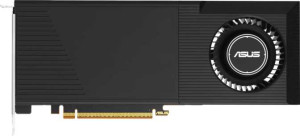
Asus Turbo Radeon AI Pro R9700
PNY GeForce RTX 5060 Ti Dual Fan 16GB
VS
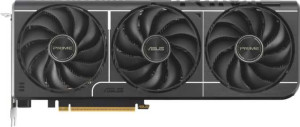
Asus Prime GeForce RTX 5060 Ti OC Edition 16GB
PNY GeForce RTX 5060 Ti Dual Fan 16GB
VS
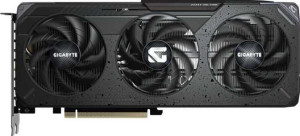
Gigabyte GeForce RTX 5060 Ti Gaming OC 16GB
PNY GeForce RTX 5060 Ti Dual Fan 16GB
VS
Zotac Gaming GeForce RTX 5060 Ti AMP 16GB
PNY GeForce RTX 5060 Ti Dual Fan 16GB
VS
PowerColor Red Devil Radeon RX 9070 XT