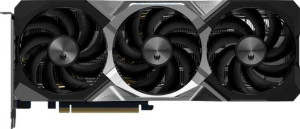
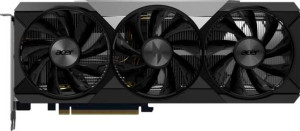
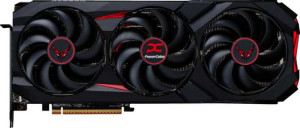
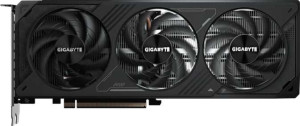
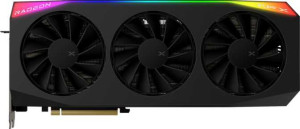
Acer Predator BiFrost Radeon RX 9070 XT OC specifications and in-depth review

Acer Predator BiFrost Radeon RX 9070 XT OC

Manufacturer: Acer

The Acer Predator BiFrost Radeon RX 9070 XT OC is a graphics card designed around AMD's RDNA 4.0 architecture, manufactured on a 4 nm process node and packing 53,900 million transistors. It carries a base GPU clock of 1870 MHz that boosts up to 3100 MHz in turbo mode, contributing to a floating-point throughput of 50.79 TFLOPS. RGB lighting is included, and the card supports up to four simultaneous displays through its output configuration.

On the memory side, the card is equipped with 16GB of GDDR6 across a 256-bit memory bus, delivering an effective speed of 20,000 MHz and a maximum bandwidth of 644 GB/s. The 128 render output units and 256 texture mapping units produce a pixel rate of 396.8 GPixel/s and a texture rate of 793.6 GTexels/s respectively. Display connectivity includes one HDMI 2.1b port and three DisplayPort outputs, while feature support covers DirectX 12 Ultimate, OpenGL 4.6, ray tracing, FSR4, and AMD SAM. The card has a rated TDP of 340W and connects via PCIe 5.0.

Pros
  • Turbo clock speed reaches 3100 MHz, with 4096 shading units contributing to a texture rate of 793.6 GTexels/s and a pixel rate of 396.8 GPixel/s
  • 16GB of GDDR6 VRAM across a 256-bit bus delivers 644 GB/s of memory bandwidth, which is substantial for memory-intensive workloads
  • Supports ray tracing, DirectX 12 Ultimate, FSR4, and AMD SAM, covering a wide range of modern rendering and upscaling capabilities
  • Four simultaneous display outputs via one HDMI 2.1b port and three DisplayPort connectors offer flexible multi-monitor configurations
  • ECC memory support adds a layer of data integrity useful in compute or professional workloads
  • Built on a 4 nm process with 53,900 million transistors and connected via PCIe 5.0, reflecting a current-generation hardware foundation
Cons
  • 340W TDP places significant demands on system power delivery and case airflow
  • No water-cooling option is available; the card relies entirely on air cooling despite its thermal load
  • DLSS and XeSS upscaling are not supported, limiting upscaling options to FSR4 only
  • No USB-C or DVI outputs are present, which may limit compatibility with certain monitors or adapters
  • At 295 mm in length, the card may not fit in smaller or more compact PC chassis
Who is this for?

This card is well-suited to users who run demanding rendering and compute workloads, given its 50.79 TFLOPS of floating-point performance, ECC memory support, and Double Precision Floating Point capability. The 16GB of GDDR6 VRAM paired with 644 GB/s of bandwidth makes it a solid fit for those working with large textures, high-resolution assets, or multi-display setups — with four output ports supporting up to four screens simultaneously. Users who prioritize current-generation feature support, including ray tracing, DirectX 12 Ultimate, FSR4, and AMD SAM, will find this card aligned with modern software requirements, as will those building systems around PCIe 5.0 platforms.

Who is this NOT for?

Users building compact or small-form-factor systems may find this card difficult to accommodate, as its 295 mm length and 340W TDP require a spacious case with robust airflow and a high-capacity power supply. The absence of water-cooling support means that in thermally constrained environments the card's heat output may be harder to manage. Those whose workflows depend on DLSS or XeSS upscaling will not find those options available here, and users who rely on USB-C or DVI display connections will need to look elsewhere, as neither port type is present on this card.

Performance:

GPU clock speed 1870 MHz
GPU turbo 3100 MHz
pixel rate 396.8 GPixel/s
floating-point performance 50.79 TFLOPS
texture rate 793.6 GTexels/s
GPU memory speed 2518 MHz
shading units 4096
texture mapping units (TMUs) 256
render output units (ROPs) 128
Has Double Precision Floating Point (DPFP)

The card operates at a base GPU clock of 1870 MHz, climbing to 3100 MHz under turbo conditions, which drives its floating-point throughput to 50.79 TFLOPS. Its 4096 shading units work alongside 256 texture mapping units and 128 render output units to deliver a texture rate of 793.6 GTexels/s and a pixel rate of 396.8 GPixel/s. GPU memory runs at 2518 MHz, and the card also supports Double Precision Floating Point, broadening its suitability for compute-oriented workloads.

Memory:

effective memory speed 20000 MHz
maximum memory bandwidth 644 GB/s
VRAM 16GB
GDDR version GDDR6
memory bus width 256-bit
Supports ECC memory

This card comes equipped with 16GB of GDDR6 VRAM running across a 256-bit memory bus, reaching an effective memory speed of 20,000 MHz and a maximum bandwidth of 644 GB/s. ECC memory support is also present, which helps maintain data integrity in error-sensitive workloads.

Features:

DirectX version DirectX 12 Ultimate
OpenGL version 4.6
OpenCL version 2.2
Supports multi-display technology
supports ray tracing
Supports 3D
supports DLSS
has FSR4
has XeSS (XMX)
AMD SAM / Intel Resizable BAR AMD SAM
has LHR
has RGB lighting
supported displays 4

The card supports DirectX 12 Ultimate, OpenGL 4.6, and OpenCL 2.2, covering a broad range of graphics and compute workloads. Ray tracing and stereoscopic 3D are both supported, and AMD FSR4 is available for upscaling, though DLSS and XeSS are not. Multi-display technology is present with support for up to four simultaneous outputs, and AMD SAM is included to help improve data throughput between the CPU and GPU. RGB lighting is built in, and the card does not carry LHR restrictions.

Ports:

has an HDMI output
HDMI ports 1
HDMI version HDMI 2.1b
DisplayPort outputs 3
USB-C ports 0
DVI outputs 0
mini DisplayPort outputs 0

The card's output configuration consists of one HDMI 2.1b port and three DisplayPort outputs, providing a total of four display connections. There are no USB-C, DVI, or mini DisplayPort outputs present on this model.

General info:

GPU architecture RDNA 4.0
Thermal Design Power (TDP) 340W
PCI Express (PCIe) version 5
semiconductor size 4 nm
number of transistors 53900 million
Has air-water cooling
width 295 mm
height 120 mm

Built on the RDNA 4.0 architecture, this card uses a 4 nm manufacturing process and integrates 53,900 million transistors. It connects via PCIe 5.0 and carries a thermal design power rating of 340W, with cooling handled solely by air — there is no water-cooling option. The card measures 295 mm in width and 120 mm in height.

Final Verdict

The Acer Predator BiFrost Radeon RX 9070 XT OC is a current-generation graphics card that brings together a well-rounded set of specifications — from its RDNA 4.0 architecture and 4 nm fabrication to its broad API support and multi-display capability. Its most defining characteristic is the combination of 16GB of GDDR6 VRAM with 644 GB/s of memory bandwidth, which positions it comfortably for demanding rendering, compute, and high-resolution workloads. That said, its 340W TDP and reliance on air cooling mean it asks a fair amount of the system it occupies, and prospective users should plan their builds accordingly. For those whose environments align with its requirements, this card delivers a feature-complete package that covers ray tracing, FSR4, ECC support, and PCIe 5.0 connectivity — making it a substantive option for users who want a thoroughly specified card without compromise on memory or modern feature coverage.

Popular Comparisons

Acer Predator BiFrost Radeon RX 9070 XT OC
VS
Acer Nitro Radeon RX 9070 OC
Acer Predator BiFrost Radeon RX 9070 XT OC
VS
AMD Radeon RX 9070 XT
Acer Predator BiFrost Radeon RX 9070 XT OC
VS
AMD Radeon RX 7800 XT
Acer Predator BiFrost Radeon RX 9070 XT OC
VS
PowerColor Red Devil Radeon RX 9070 XT
Acer Predator BiFrost Radeon RX 9070 XT OC
VS
Gigabyte GeForce RTX 5070 WindForce OC SFF
Acer Predator BiFrost Radeon RX 9070 XT OC
VS
XFX Mercury Radeon RX 9070 XT OC Gaming Edition