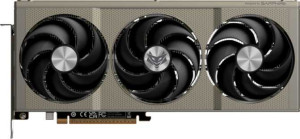
Sapphire Nitro+ Radeon RX 9060 XT 16GB specifications and in-depth review

Sapphire Nitro+ Radeon RX 9060 XT 16GB

Manufacturer: Sapphire

The Sapphire Nitro+ Radeon RX 9060 XT is a desktop graphics card from Sapphire based on AMD's RDNA 4.0 architecture, manufactured on a 4 nm process node with 29,700 million transistors. It carries a 16GB GDDR6 VRAM allocation across a 128-bit memory bus, delivering an effective memory speed of 20,000 MHz and a maximum bandwidth of 322.3 GB/s. The card includes RGB lighting and supports up to three simultaneous displays through its combination of one HDMI 2.1b and two DisplayPort outputs.

On the performance side, the Sapphire Nitro+ Radeon RX 9060 XT operates at a base GPU clock of 1,900 MHz with a turbo frequency reaching 3,320 MHz, translating to 27.2 TFLOPS of floating-point throughput, a pixel rate of 212.5 GPixel/s, and a texture rate of 425 GTexels/s. The card is equipped with 2,048 shading units, 128 TMUs, and 64 ROPs, and carries a TDP of 182W with a PCIe 5.0 interface. Feature support covers DirectX 12 Ultimate, OpenGL 4.6, ray tracing, FSR4, AMD SAM, ECC memory, and stereoscopic 3D, while DLSS and XeSS are not supported.

Pros
  • The 16GB GDDR6 VRAM allocation is generous for this GPU tier, supporting high-resolution textures and memory-intensive workloads without running into capacity limits
  • FSR4 upscaling support expands rendering flexibility for compatible titles
  • Ray tracing is supported, enabling hardware-accelerated lighting and shadow effects in compatible applications
  • ECC memory support adds data integrity protection, useful for compute-oriented or error-sensitive tasks
  • RGB lighting is included on the board for users who care about visual customization within their build
  • The 4 nm process node and RDNA 4.0 architecture result in a high transistor count of 29,700 million within a relatively contained 182W TDP
Cons
  • The 128-bit memory bus is narrow for a card carrying 16GB of VRAM, which can limit sustained memory bandwidth in demanding scenarios despite the high effective memory speed
  • DLSS is not supported, ruling out that upscaling option entirely
  • XeSS (XMX) is also absent, leaving FSR4 as the only hardware-accelerated upscaling path
  • There is no USB-C display output, which may be limiting for users with USB-C monitors or capture setups
  • Water cooling is not supported; the card relies entirely on air cooling, which may be a consideration in thermally constrained cases
Who is this for?

This card is well-suited to users running high-resolution gaming or content creation workloads that benefit from a large VRAM pool, as the 16GB GDDR6 allocation handles memory-intensive scenes and large asset libraries without bottlenecking. The inclusion of ray tracing, FSR4, and DirectX 12 Ultimate support makes it a practical fit for players engaging with modern titles that leverage these rendering features. Additionally, the presence of ECC memory and Double Precision Floating Point support extends its relevance to users who occasionally run compute or professional GPU tasks alongside standard graphics workloads, and the three-display output configuration suits those building a multi-monitor desktop setup.

Who is this NOT for?

Users who rely on DLSS or XeSS upscaling will find this card incompatible with those workflows, as neither technology is supported — making it a poor fit for those already invested in NVIDIA or Intel upscaling pipelines. The 128-bit memory bus may also be a limiting factor for workloads that demand sustained high bandwidth across the full VRAM range, such as certain professional visualization or compute tasks where bandwidth consistency is critical. Furthermore, users in thermally constrained or small-form-factor builds may find the 300 mm length and air-only cooling a challenging fit, particularly where airflow is restricted and heat dissipation headroom is limited.

Performance:

GPU clock speed 1900 MHz
GPU turbo 3320 MHz
pixel rate 212.5 GPixel/s
floating-point performance 27.2 TFLOPS
texture rate 425 GTexels/s
GPU memory speed 2518 MHz
shading units 2048
texture mapping units (TMUs) 128
render output units (ROPs) 64
Has Double Precision Floating Point (DPFP)

The Performance section of this card is defined by a base GPU clock of 1,900 MHz that scales up to a turbo frequency of 3,320 MHz, supporting a floating-point throughput of 27.2 TFLOPS alongside a pixel rate of 212.5 GPixel/s and a texture rate of 425 GTexels/s. The GPU memory runs at 2,518 MHz, while the shader configuration consists of 2,048 shading units paired with 128 texture mapping units and 64 render output units. Double Precision Floating Point (DPFP) is supported, broadening the card's suitability for compute-oriented workloads beyond standard rendering tasks.

Memory:

effective memory speed 20000 MHz
maximum memory bandwidth 322.3 GB/s
VRAM 16GB
GDDR version GDDR6
memory bus width 128-bit
Supports ECC memory

The card is equipped with 16GB of GDDR6 VRAM running across a 128-bit memory bus, reaching an effective memory speed of 20,000 MHz and delivering a maximum bandwidth of 322.3 GB/s. ECC memory support is included, which adds a layer of data integrity protection useful in error-sensitive workloads.

Features:

DirectX version DirectX 12 Ultimate
OpenGL version 4.6
OpenCL version 2.2
Supports multi-display technology
supports ray tracing
Supports 3D
supports DLSS
has FSR4
has XeSS (XMX)
AMD SAM / Intel Resizable BAR AMD SAM
has LHR
has RGB lighting
supported displays 3

This card supports DirectX 12 Ultimate, OpenGL 4.6, and OpenCL 2.2, covering a broad range of modern graphics and compute APIs. Ray tracing and stereoscopic 3D are both supported, and AMD FSR4 is available as the upscaling solution, while DLSS and XeSS (XMX) are not supported. Multi-display output is enabled across up to three screens, and AMD SAM (Smart Access Memory) is included for compatible system configurations. The card does not carry LHR restrictions, and RGB lighting is present on the board itself.

Ports:

has an HDMI output
HDMI ports 1
HDMI version HDMI 2.1b
DisplayPort outputs 2
USB-C ports 0
DVI outputs 0
mini DisplayPort outputs 0

The card's output configuration consists of one HDMI 2.1b port and two DisplayPort outputs, providing a total of three video connections. There are no USB-C, DVI, or mini DisplayPort outputs present on this model.

General info:

GPU architecture RDNA 4.0
Thermal Design Power (TDP) 182W
PCI Express (PCIe) version 5
semiconductor size 4 nm
number of transistors 29700 million
Has air-water cooling
width 300 mm
height 131 mm

Built on the RDNA 4.0 architecture, this card uses a 4 nm manufacturing process and integrates 29,700 million transistors, with a TDP of 182W and a PCIe 5.0 interface. Physical dimensions measure 300 mm in width and 131 mm in height, and the card relies solely on air cooling, as water cooling is not supported.

Final Verdict

The Sapphire Nitro+ Radeon RX 9060 XT is a well-specified graphics card that positions itself around a combination of generous VRAM capacity and modern feature support, with 16GB GDDR6 memory, FSR4 upscaling, ray tracing, and DirectX 12 Ultimate covering the core expectations of contemporary gaming and light compute use. Built on the RDNA 4.0 architecture at 4 nm, it delivers a respectable performance profile within a 182W thermal envelope, and the inclusion of ECC memory and DPFP support adds practical value for users who occasionally step outside purely graphical workloads. The absence of DLSS and XeSS narrows its upscaling compatibility, and the 128-bit bus is a constraint worth acknowledging at this VRAM level, but for users operating within AMD-aligned workflows and multi-display setups, it represents a coherent and capable option backed by Sapphire's Nitro+ build quality.

Popular Comparisons

Sapphire Nitro+ Radeon RX 9060 XT 16GB
VS
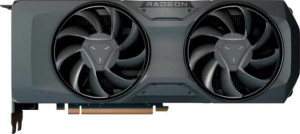
AMD Radeon RX 7700
AMD Radeon RX 7700
Sapphire Nitro+ Radeon RX 9060 XT 16GB
VS
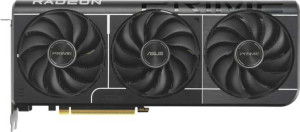
Asus Prime Radeon RX 9060 XT OC Edition 16GB
Sapphire Nitro+ Radeon RX 9060 XT 16GB
VS
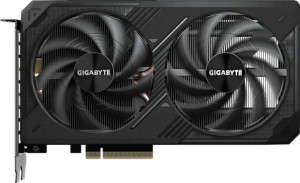
Gigabyte GeForce RTX 5060 Ti WindForce 16GB
Sapphire Nitro+ Radeon RX 9060 XT 16GB
VS
Gigabyte Radeon RX 9060 XT Gaming 16GB
Sapphire Nitro+ Radeon RX 9060 XT 16GB
VS
Asus Prime GeForce RTX 5060 Ti OC Edition 16GB
Sapphire Nitro+ Radeon RX 9060 XT 16GB
VS
AMD Radeon RX 9060 XT 8GB
Sapphire Nitro+ Radeon RX 9060 XT 16GB
VS
Nvidia GeForce RTX 5060 Ti 16GB
Sapphire Nitro+ Radeon RX 9060 XT 16GB
VS
MSI GeForce RTX 5060 Ti Gaming Trio 16GB
Sapphire Nitro+ Radeon RX 9060 XT 16GB
VS
Acer Nitro Radeon RX 9070
Sapphire Nitro+ Radeon RX 9060 XT 16GB
VS
Sapphire Pure Radeon RX 9060 XT 16GB
Sapphire Nitro+ Radeon RX 9060 XT 16GB
VS
Sapphire Pulse Radeon RX 9060 XT 16GB