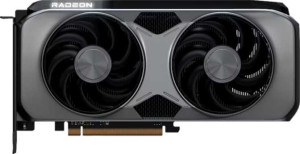
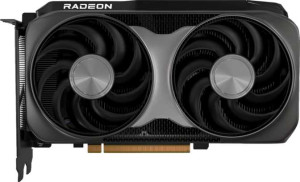
AMD Radeon RX 9070 GRE specifications and in-depth review

AMD Radeon RX 9070 GRE

Manufacturer: AMD

The AMD Radeon RX 9070 GRE is a graphics card based on AMD's RDNA 4.0 architecture, fabricated on a 4 nm process with 53.9 billion transistors. It operates with a base clock of 1420 MHz and a boost clock of 2790 MHz, delivering 34.3 TFLOPS of floating-point performance alongside a pixel rate of 267.8 GPixel/s and a texture rate of 535.7 GTexels/s. The card supports ray tracing, AMD FSR4, and DirectX 12 Ultimate, and includes RGB lighting as well as AMD SAM for potential bandwidth optimizations.

On the memory side, the RX 9070 GRE is equipped with 12GB of GDDR6 across a 192-bit bus, reaching an effective memory speed of 18000 MHz and a maximum bandwidth of 432 GB/s. ECC memory support is included. The card carries a TDP of 220W and connects via PCIe 5.0. Display output options consist of one HDMI 2.1b port and three DisplayPort outputs, supporting up to four displays simultaneously. OpenGL 4.6 and OpenCL 2.2 are supported, and the card does not include DLSS or XeSS support.

Pros
  • Supports ray tracing and AMD FSR4 upscaling, covering modern rendering and image reconstruction workflows
  • Four display outputs — three DisplayPort and one HDMI 2.1b — allow flexible multi-monitor configurations without adapters
  • ECC memory support adds a layer of data integrity for compute-oriented tasks
  • PCIe 5.0 connectivity ensures compatibility with current-generation motherboard platforms
  • RDNA 4.0 architecture built on a 4 nm process with 53,900 million transistors reflects a modern and dense chip design
  • AMD SAM support enables the system to access the full VRAM pool, which can benefit CPU-GPU data throughput
Cons
  • DLSS and XeSS upscaling are not supported, limiting upscaling options to AMD FSR4 only
  • The 192-bit memory bus width is narrower than what some higher-tier cards in this category offer, which may limit peak bandwidth scaling
  • A 220W TDP demands adequate system power delivery and airflow planning
  • No USB-C display output may require adapters for certain modern monitors or portable displays
  • No integrated air-water cooling solution means thermal management depends entirely on the third-party cooler design
Who is this for?

The RX 9070 GRE is well-suited for users who want to run ray tracing and modern rendering workloads on a card built around current-generation architecture. Its support for DirectX 12 Ultimate, AMD FSR4, and a 2790 MHz boost clock make it a practical fit for demanding real-time graphics applications. The 12GB of GDDR6 memory and 432 GB/s bandwidth also make it a reasonable choice for compute and GPU-accelerated tasks that benefit from ECC memory and OpenCL 2.2 support. Users running multi-monitor setups of up to four displays will find the port layout accommodating without requiring additional hardware.

Who is this NOT for?

Users who rely on DLSS or XeSS upscaling as part of their workflow will find this card limiting, since neither technology is supported — FSR4 is the only upscaling option available. The 192-bit memory bus and absence of a wider bandwidth configuration may also make this card less suited for high-resolution texture-heavy workloads where memory throughput is a frequent bottleneck. Additionally, users with constrained system builds should note the 220W TDP, as it requires deliberate power and thermal planning — the card ships without an integrated air-water cooling solution, leaving thermal performance entirely dependent on the installed cooler.

Performance:

GPU clock speed 1420 MHz
GPU turbo 2790 MHz
pixel rate 267.8 GPixel/s
floating-point performance 34.3 TFLOPS
texture rate 535.7 GTexels/s
GPU memory speed 2250 MHz
shading units 3072
texture mapping units (TMUs) 192
render output units (ROPs) 96
Has Double Precision Floating Point (DPFP)

The AMD Radeon RX 9070 GRE runs at a base GPU clock of 1420 MHz, scaling up to 2790 MHz in turbo mode, and delivers 34.3 TFLOPS of floating-point performance alongside a texture rate of 535.7 GTexels/s and a pixel rate of 267.8 GPixel/s. Its GPU memory operates at 2250 MHz. The card is built with 3072 shading units, 192 texture mapping units, and 96 render output units, giving it a well-rounded pipeline configuration for handling demanding rendering workloads. Double Precision Floating Point (DPFP) is also supported.

Memory:

effective memory speed 18000 MHz
maximum memory bandwidth 432 GB/s
VRAM 12GB
GDDR version GDDR6
memory bus width 192-bit
Supports ECC memory

The AMD Radeon RX 9070 GRE features 12GB of GDDR6 VRAM running at an effective speed of 18000 MHz across a 192-bit memory bus, yielding a maximum memory bandwidth of 432 GB/s. ECC memory support is included, which allows for error detection and correction during memory operations.

Features:

DirectX version DirectX 12 Ultimate
OpenGL version 4.6
OpenCL version 2.2
Supports multi-display technology
supports ray tracing
Supports 3D
supports DLSS
has FSR4
has XeSS (XMX)
AMD SAM / Intel Resizable BAR AMD SAM
has LHR
has RGB lighting
supported displays 4

The AMD Radeon RX 9070 GRE supports DirectX 12 Ultimate, OpenGL 4.6, and OpenCL 2.2, covering a broad range of graphics and compute workloads. Ray tracing and stereoscopic 3D are both supported, and AMD FSR4 is available for upscaling, while DLSS and XeSS are not supported. The card includes AMD SAM for memory access optimization and drives up to four displays simultaneously through its multi-display support. RGB lighting is built in, and the card does not feature LHR (Lite Hash Rate) limitations.

Ports:

has an HDMI output
HDMI ports 1
HDMI version HDMI 2.1b
DisplayPort outputs 3
USB-C ports 0
DVI outputs 0
mini DisplayPort outputs 0

The AMD Radeon RX 9070 GRE offers a total of four display outputs: three DisplayPort connectors and one HDMI 2.1b port. There are no USB-C, DVI, or mini DisplayPort outputs on this card.

General info:

GPU architecture RDNA 4.0
Thermal Design Power (TDP) 220W
PCI Express (PCIe) version 5
semiconductor size 4 nm
number of transistors 53900 million
Has air-water cooling

The AMD Radeon RX 9070 GRE is built on the RDNA 4.0 architecture, manufactured using a 4 nm process and integrating 53,900 million transistors. It connects via PCIe 5.0 and carries a Thermal Design Power of 220W. The card does not include an integrated air-water cooling solution.

Final Verdict

The AMD Radeon RX 9070 GRE is a graphics card that brings together RDNA 4.0 architecture, ray tracing support, and AMD FSR4 upscaling in a package built on a modern 4 nm process. Its 2790 MHz boost clock paired with 12GB of GDDR6 memory and 432 GB/s bandwidth give it a technically well-rounded foundation for demanding graphical and compute workloads, while ECC memory support and PCIe 5.0 connectivity add practical value for users who need stability and current-platform compatibility. The absence of DLSS and XeSS, along with a 220W TDP that requires attentive system planning, define the boundaries of its appeal. For users whose workflows align with AMD's ecosystem — particularly those leveraging FSR4, multi-display configurations, and DirectX 12 Ultimate — the RX 9070 GRE represents a capable and technically coherent option within its category.

Popular Comparisons

AMD Radeon RX 9070 GRE
VS
AMD Radeon RX 9060 XT 16GB
AMD Radeon RX 9070 GRE
VS
AMD Radeon RX 9070
AMD Radeon RX 9070
AMD Radeon RX 9070 GRE
VS
Nvidia GeForce RTX 5070 Ti
AMD Radeon RX 9070 GRE
VS
AMD Radeon RX 9070 XT
AMD Radeon RX 9070 GRE
VS
PNY GeForce RTX 5060 OC Dual Fan
AMD Radeon RX 9070 GRE
VS
Nvidia GeForce RTX 5090