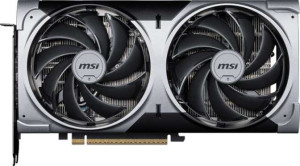
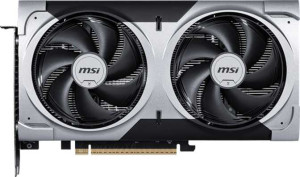
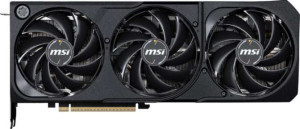
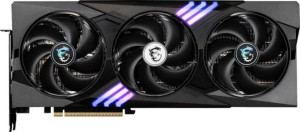
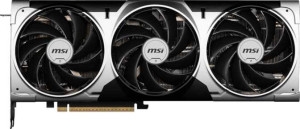
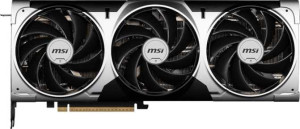
MSI GeForce RTX 5070 Ventus 2X OC specifications and in-depth review

MSI GeForce RTX 5070 Ventus 2X OC

Manufacturer: MSI

The MSI GeForce RTX 5070 Ventus 2X OC is a Blackwell-architecture graphics card designed for desktop systems, drawing 250W TDP and manufactured on a 5nm process with 31.1 billion transistors. It operates at a base clock of 2325 MHz and reaches a boosted frequency of 2542 MHz, delivering 31.24 TFLOPS of floating-point performance across its 6144 shading units.

On the memory side, the card carries 12GB of GDDR7 VRAM across a 192-bit bus, achieving an effective speed of 28000 MHz and a peak bandwidth of 672 GB/s. It supports DirectX 12 Ultimate, OpenGL 4.6, ray tracing, and DLSS, and connects to up to four displays simultaneously via one HDMI 2.1b port and three DisplayPort outputs. Intel Resizable BAR support and PCIe 5.0 compatibility round out its connectivity features, while ECC memory support adds an extra layer of data integrity.

Pros
  • Supports ray tracing and DLSS, enabling hardware-accelerated rendering and upscaling features
  • GDDR7 memory with a 672 GB/s bandwidth ceiling and an effective speed of 28000 MHz allows for fast data throughput
  • ECC memory support adds data integrity for compute-sensitive workloads
  • Four simultaneous display outputs via one HDMI 2.1b and three DisplayPort connections offer flexible multi-monitor setups
  • PCIe 5.0 interface ensures compatibility with current-generation motherboard platforms
  • The 5nm fabrication process and 31.1 billion transistors reflect a dense, modern silicon design
Cons
  • The 192-bit memory bus width is narrower than what some cards in this category offer, which can limit memory bandwidth scaling
  • No USB-C output is available, restricting compatibility with certain monitors and adapters that rely on that connector
  • At 250W TDP, the card has a notable power draw that demands adequate system cooling and PSU headroom
  • Air-water cooling is not supported, so users are limited to the included air-cooling solution
  • No RGB lighting for users who factor aesthetics into their build design
Who is this for?

This card is well-suited to desktop users who want to leverage ray tracing and DLSS in modern games and applications, as both features are fully supported at the hardware level. The 12GB of GDDR7 memory combined with 672 GB/s of bandwidth makes it a practical choice for compute-intensive workloads such as 3D rendering or content creation pipelines that benefit from ECC memory support. Users who run multi-monitor setups of up to four displays will also find the output configuration — one HDMI 2.1b and three DisplayPort connections — well-matched to their needs.

Who is this NOT for?

The 192-bit memory bus may limit scalability for workloads that demand very high memory bandwidth at the top end, making this card a less natural fit for tasks where bus width is a primary bottleneck. Users seeking USB-C display connectivity will find no such output available, which rules out direct compatibility with monitors or devices that rely solely on that interface. Additionally, the 250W TDP means the card is not well-suited to compact or low-power system builds where thermal headroom and power supply capacity are tightly constrained.

Performance:

GPU clock speed 2325 MHz
GPU turbo 2542 MHz
pixel rate 203.4 GPixel/s
floating-point performance 31.24 TFLOPS
texture rate 488.1 GTexels/s
GPU memory speed 1750 MHz
shading units 6144
texture mapping units (TMUs) 192
render output units (ROPs) 80
Has Double Precision Floating Point (DPFP)

The GPU runs at a base clock of 2325 MHz, scaling up to a boost frequency of 2542 MHz, and delivers 31.24 TFLOPS of floating-point performance with double precision floating point support included. Its 6144 shading units work alongside 192 texture mapping units and 80 render output units, producing a texture rate of 488.1 GTexels/s and a pixel rate of 203.4 GPixel/s. GPU memory operates at 1750 MHz, contributing to the card's overall throughput figures.

Memory:

effective memory speed 28000 MHz
maximum memory bandwidth 672 GB/s
VRAM 12GB
GDDR version GDDR7
memory bus width 192-bit
Supports ECC memory

The card is equipped with 12GB of GDDR7 VRAM running across a 192-bit memory bus, reaching an effective memory speed of 28000 MHz and a maximum bandwidth of 672 GB/s. ECC memory support is included, adding a layer of data integrity for workloads where memory accuracy matters.

Features:

DirectX version DirectX 12 Ultimate
OpenGL version 4.6
OpenCL version 3
Supports multi-display technology
supports ray tracing
Supports 3D
supports DLSS
has XeSS (XMX)
AMD SAM / Intel Resizable BAR Intel Resizable BAR
has LHR
has RGB lighting
supported displays 4

This card supports DirectX 12 Ultimate, OpenGL 4.6, and OpenCL 3, covering a broad range of graphics and compute APIs. Ray tracing and DLSS are both supported, alongside stereoscopic 3D and multi-display technology spanning up to four outputs simultaneously. Intel Resizable BAR is available, while XeSS (XMX) and LHR are not present. The card does not include RGB lighting.

Ports:

has an HDMI output
HDMI ports 1
HDMI version HDMI 2.1b
DisplayPort outputs 3
USB-C ports 0
DVI outputs 0
mini DisplayPort outputs 0

The card's output configuration consists of one HDMI 2.1b port and three DisplayPort outputs, totaling four available display connections. There are no USB-C, DVI, or mini DisplayPort outputs present on this model.

General info:

GPU architecture Blackwell
Thermal Design Power (TDP) 250W
PCI Express (PCIe) version 5
semiconductor size 5 nm
number of transistors 31100 million
Has air-water cooling
width 236 mm
height 126 mm

Built on the Blackwell architecture and fabricated using a 5nm process, this GPU integrates 31,100 million transistors and connects via PCIe 5.0. It carries a thermal design power of 250W and does not include air-water cooling. The card measures 236mm in width and 126mm in height.

Final Verdict

The MSI GeForce RTX 5070 Ventus 2X OC is a well-specified Blackwell-generation graphics card that brings together a modern 5nm design, DLSS and ray tracing support, and 12GB of GDDR7 memory with 672 GB/s of bandwidth into a package built for current-generation desktop platforms. Its four-display output configuration, ECC memory support, and PCIe 5.0 interface signal a card tuned for both gaming and light compute use cases, though users with specific connectivity needs or bandwidth-intensive workflows at scale may find its 192-bit bus and lack of USB-C output worth weighing carefully. Overall, it represents a technically current and feature-complete option for desktop users whose workloads align with its strengths.

Popular Comparisons

MSI GeForce RTX 5070 Ventus 2X OC
VS
MSI GeForce RTX 5060 Ti Ventus 2X Plus 16GB
MSI GeForce RTX 5070 Ventus 2X OC
VS
MSI GeForce RTX 5060 Ti Inspire 2X 16GB
MSI GeForce RTX 5070 Ventus 2X OC
VS
Acer Nitro Radeon RX 9070 XT OC
MSI GeForce RTX 5070 Ventus 2X OC
VS
Gigabyte Radeon RX 9070 XT Gaming OC
MSI GeForce RTX 5070 Ventus 2X OC
VS
Asus Dual GeForce RTX 5070 OC Edition
MSI GeForce RTX 5070 Ventus 2X OC
VS
MSI GeForce RTX 5070 Shadow 3X OC
MSI GeForce RTX 5070 Ventus 2X OC
VS
Inno3D GeForce RTX 5070 Twin X2
MSI GeForce RTX 5070 Ventus 2X OC
VS
MSI GeForce RTX 5070 Ti Ventus 3X
MSI GeForce RTX 5070 Ventus 2X OC
VS
MSI GeForce RTX 5070 Ti Shadow 3X
MSI GeForce RTX 5070 Ventus 2X OC
VS
MSI GeForce RTX 5070 Gaming Trio OC
MSI GeForce RTX 5070 Ventus 2X OC
VS
KFA2 GeForce RTX 5070 Ti 1-Click OC
MSI GeForce RTX 5070 Ventus 2X OC
VS
Galax GeForce RTX 5070 Ex 1-Click OC
MSI GeForce RTX 5070 Ventus 2X OC
VS
Gigabyte GeForce RTX 5070 Eagle OC Ice SFF
MSI GeForce RTX 5070 Ventus 2X OC
VS
Galax GeForce RTX 5070 Ex Gamer 1-Click OC
MSI GeForce RTX 5070 Ventus 2X OC
VS
MSI GeForce RTX 5070 Ti Vanguard SOC
MSI GeForce RTX 5070 Ventus 2X OC
VS
Gigabyte GeForce RTX 5070 Eagle OC SFF
MSI GeForce RTX 5070 Ventus 2X OC
VS
Asus Prime GeForce RTX 5070
MSI GeForce RTX 5070 Ventus 2X OC
VS
Asus Prime GeForce RTX 5070 OC Edition
MSI GeForce RTX 5070 Ventus 2X OC
VS
Zotac Gaming GeForce RTX 5070 Solid OC
MSI GeForce RTX 5070 Ventus 2X OC
VS
Palit GeForce RTX 5070 Infinity 3
MSI GeForce RTX 5070 Ventus 2X OC
VS
Zotac Gaming GeForce RTX 5080 Solid OC
MSI GeForce RTX 5070 Ventus 2X OC
VS
Palit GeForce RTX 5070 GamingPro OC
MSI GeForce RTX 5070 Ventus 2X OC
VS
PNY GeForce RTX 5070 OC Triple Fan
MSI GeForce RTX 5070 Ventus 2X OC
VS
MSI GeForce RTX 5070 Ventus 3X OC
MSI GeForce RTX 5070 Ventus 2X OC
VS
MSI GeForce RTX 5080 Ventus 3X