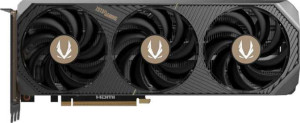
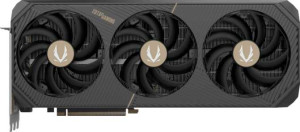
Zotac Gaming GeForce RTX 5070 Ti Solid SFF specifications and in-depth review

Zotac Gaming GeForce RTX 5070 Ti Solid SFF

Manufacturer: Zotac

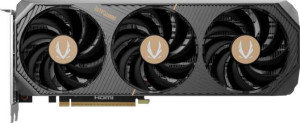
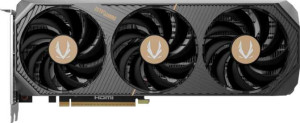
The Zotac Gaming GeForce RTX 5070 Ti Solid SFF is a compact graphics card drawing on Nvidia's Blackwell architecture, offering a well-rounded feature set for demanding workloads and gaming applications. Built around 8960 shading units, it operates at a base clock of 2295 MHz with a boost up to 2452 MHz, while its 43.94 TFLOPS of floating-point performance reflects substantial computational throughput within its form factor.

On the memory side, the card carries 16GB of GDDR7 VRAM across a 256-bit bus, delivering a maximum bandwidth of 896 GB/s at an effective speed of 28000 MHz. Display connectivity includes one HDMI 2.1b port and three DisplayPort outputs, supporting up to four simultaneous displays. The card supports DirectX 12 Ultimate, OpenGL 4.6, OpenCL 3, ray tracing, and DLSS, along with Intel Resizable BAR. Its 300W TDP is handled through air cooling, and the card measures 304.4 mm in length and 115.8 mm in height.

Pros
  • Supports up to four displays simultaneously through a combination of one HDMI 2.1b port and three DisplayPort outputs
  • 16GB of GDDR7 VRAM with a 896 GB/s memory bandwidth suits memory-intensive workloads without frequent bottlenecking
  • ECC memory support adds a layer of data integrity protection useful in compute-oriented tasks
  • DLSS and ray tracing support are both present, broadening compatibility with modern rendering techniques
  • Double Precision Floating Point (DPFP) support extends usability to workloads that rely on 64-bit arithmetic
  • The compact physical dimensions of 304.4 mm x 115.8 mm make it more accommodating in smaller form factor builds
Cons
  • A 300W TDP places notable demands on system power delivery and case airflow planning
  • No USB-C output is available, limiting direct connectivity for displays or devices that rely on that port
  • Water cooling is not supported, leaving thermal management entirely dependent on air cooling
  • XeSS (XMX) is not supported, narrowing upscaling options to DLSS only
  • The 256-bit memory bus width may be a limiting factor compared to wider configurations found on higher-tier cards in the same category
Who is this for?

This card is well-suited to users who need substantial GPU compute capability within a small form factor build, where physical space is limited but workload demands are not. The combination of 16GB GDDR7 VRAM, ECC memory support, and Double Precision Floating Point capability makes it a practical fit for those running compute-intensive or data-sensitive tasks such as simulation, visualization, or technical workloads alongside gaming. The four-display output support also makes it appropriate for multi-monitor setups in compact workstation environments where desk space and case volume are at a premium.

Who is this NOT for?

Users building into very constrained cases with limited airflow may find the 300W TDP challenging to manage, as the card relies entirely on air cooling with no water cooling option available. Those who depend on USB-C display connectivity will need to look elsewhere, as no such port is present on this card. Additionally, users seeking the broadest possible upscaling compatibility may be constrained by the absence of XeSS support, since upscaling options are limited to DLSS alone on this card.

Performance:

GPU clock speed 2295 MHz
GPU turbo 2452 MHz
pixel rate 235.4 GPixel/s
floating-point performance 43.94 TFLOPS
texture rate 686.6 GTexels/s
GPU memory speed 1750 MHz
shading units 8960
texture mapping units (TMUs) 280
render output units (ROPs) 96
Has Double Precision Floating Point (DPFP)

The Performance section of this card centers on a base GPU clock of 2295 MHz that boosts up to 2452 MHz under load, supported by 8960 shading units and 280 texture mapping units (TMUs) working alongside 96 render output units (ROPs). Floating-point throughput reaches 43.94 TFLOPS, while the texture rate stands at 686.6 GTexels/s and the pixel rate at 235.4 GPixel/s, reflecting solid rasterization capability. GPU memory operates at 1750 MHz, and the card includes support for Double Precision Floating Point (DPFP), making it capable of handling workloads that require 64-bit arithmetic precision.

Memory:

effective memory speed 28000 MHz
maximum memory bandwidth 896 GB/s
VRAM 16GB
GDDR version GDDR7
memory bus width 256-bit
Supports ECC memory

This card is equipped with 16GB of GDDR7 VRAM running across a 256-bit memory bus, reaching an effective memory speed of 28000 MHz and a maximum bandwidth of 896 GB/s. ECC memory support is included, allowing the card to detect and correct memory errors, which can be relevant for workloads where data integrity is a priority.

Features:

DirectX version DirectX 12 Ultimate
OpenGL version 4.6
OpenCL version 3
Supports multi-display technology
supports ray tracing
Supports 3D
supports DLSS
has XeSS (XMX)
AMD SAM / Intel Resizable BAR Intel Resizable BAR
has LHR
has RGB lighting
supported displays 4

The card supports DirectX 12 Ultimate, OpenGL 4.6, and OpenCL 3, covering a broad range of graphics and compute APIs. Ray tracing and DLSS are both supported, alongside stereoscopic 3D and multi-display technology spanning up to four outputs simultaneously. Intel Resizable BAR is included, while XeSS (XMX) and LHR are not part of this card's feature set. RGB lighting is present on the card, adding a visual element to its physical design.

Ports:

has an HDMI output
HDMI ports 1
HDMI version HDMI 2.1b
DisplayPort outputs 3
USB-C ports 0
DVI outputs 0
mini DisplayPort outputs 0

The card's output configuration consists of one HDMI 2.1b port and three DisplayPort outputs, providing a total of four display connections. There are no USB-C, DVI, or mini DisplayPort outputs included on this card.

General info:

GPU architecture Blackwell
Thermal Design Power (TDP) 300W
PCI Express (PCIe) version 5
semiconductor size 5 nm
number of transistors 45600 million
Has air-water cooling
width 304.4 mm
height 115.8 mm

Built on the Blackwell architecture, this card uses a 5 nm semiconductor process and integrates 45,600 million transistors, connecting to the system via a PCIe 5 interface. It carries a Thermal Design Power of 300W and relies on air cooling, with no water cooling option included. The card measures 304.4 mm in width and 115.8 mm in height, reflecting its compact SFF-oriented physical footprint.
Final Verdict

The Zotac Gaming GeForce RTX 5070 Ti Solid SFF presents a technically capable package for users who need serious GPU performance within a compact footprint. Its 16GB of GDDR7 VRAM paired with 896 GB/s of memory bandwidth and ECC support make it a versatile card that extends beyond gaming into compute and visualization workloads, while features like DLSS, ray tracing, and four-display output round out a well-specified feature set. Thermal and connectivity considerations — namely its 300W air-only cooling requirement and the absence of USB-C output — mean it suits environments where those constraints are accounted for in advance. Overall, it represents a focused option for small form factor builders who prioritize compute density and memory capability without sacrificing display flexibility.

Popular Comparisons

Zotac Gaming GeForce RTX 5070 Ti Solid SFF
VS
Asus TUF Gaming GeForce RTX 5070 Ti
Zotac Gaming GeForce RTX 5070 Ti Solid SFF
VS
Zotac Gaming GeForce RTX 5070 Ti Solid Core OC
Zotac Gaming GeForce RTX 5070 Ti Solid SFF
VS
Zotac Gaming GeForce RTX 5070 Ti Solid OC
Zotac Gaming GeForce RTX 5070 Ti Solid SFF
VS
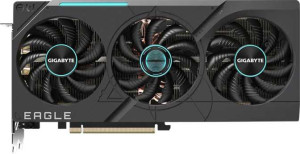
Gigabyte GeForce RTX 4070 Ti Super Eagle
Zotac Gaming GeForce RTX 5070 Ti Solid SFF
VS
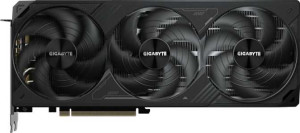
Gigabyte GeForce RTX 5070 Ti WindForce OC SFF
Zotac Gaming GeForce RTX 5070 Ti Solid SFF
VS
Zotac Gaming GeForce RTX 5070 Ti Solid
Zotac Gaming GeForce RTX 5070 Ti Solid SFF
VS
AMD Radeon RX 9070
AMD Radeon RX 9070
Zotac Gaming GeForce RTX 5070 Ti Solid SFF
VS
Zotac Gaming GeForce RTX 5070 Ti Solid SFF OC
Zotac Gaming GeForce RTX 5070 Ti Solid SFF
VS
Zotac GeForce RTX 4070 Super X-Gaming GOC