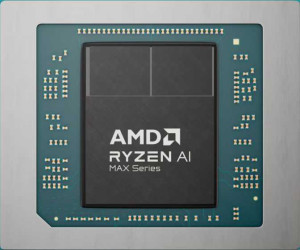
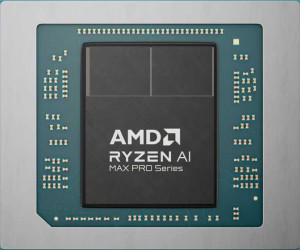
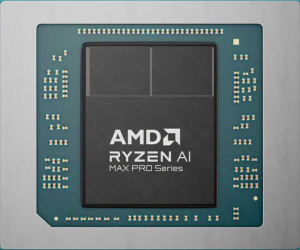
The AMD Ryzen AI Max 385 is designed for both laptops and desktops, featuring a 4 nm semiconductor size for enhanced efficiency. With a thermal design power (TDP) of 55W, it maintains a balance between performance and power consumption. The processor also supports PCI Express 4.0 for faster data transfer and is fully compatible with 64-bit operating systems. Additionally, it comes with integrated graphics and can handle a maximum CPU temperature of 100°C.
The AMD Ryzen AI Max 385 delivers a solid performance with 8 x 3.6 GHz CPU speed and a turbo clock speed of 5 GHz for handling demanding tasks. It features 16 threads and includes ample cache with 32 MB of L3 cache and 8 MB of L2 cache. The processor operates without an unlocked multiplier, offering stable performance without manual overclocking, and uses a clock multiplier of 36. Notably, it does not support big.LITTLE technology, focusing on uniform performance across all cores.
The AMD Ryzen AI Max 385 achieves a PassMark result of 18441, indicating strong overall performance. For single-threaded tasks, it scores 2056 in the PassMark benchmark, showcasing its efficiency in handling single-core workloads.
The AMD Ryzen AI Max 385 features integrated Radeon 8050S graphics, with a GPU clock speed of 2800 MHz and support for DirectX 12 Ultimate for enhanced visual performance. It offers a total of 32 GPU execution units and supports up to four displays. Additionally, it is compatible with OpenGL 4.6 and OpenCL 3, providing strong graphics and compute capabilities for a variety of applications.
The AMD Ryzen AI Max 385 supports high-performance memory with a maximum RAM speed of 8000 MHz and is compatible with DDR5 memory. It features four memory channels and supports a maximum memory capacity of 128GB, allowing for robust multitasking and memory-intensive applications. Additionally, it supports ECC memory for improved data integrity and error correction.
The AMD Ryzen AI Max 385 includes support for a variety of instruction sets such as MMX, F16C, FMA3, AES, AVX, AVX2, SSE 4.1, and SSE 4.2, enhancing its ability to handle different workloads efficiently. It also supports multithreading, allowing for better parallel processing, and includes the NX bit for enhanced security by preventing the execution of malicious code.