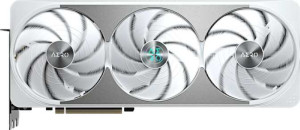
Gigabyte Aorus Radeon RX 9070 XT Elite specifications and in-depth review

Gigabyte Aorus Radeon RX 9070 XT Elite

Manufacturer: Gigabyte

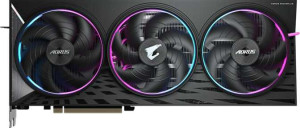
The Gigabyte Aorus Radeon RX 9070 XT Elite is a high-end graphics card from Gigabyte's Aorus lineup, powered by AMD's RDNA 4.0 architecture on a 4 nm process node. It ships with 16GB of GDDR6 memory across a 256-bit bus, delivering a maximum bandwidth of 644.6 GB/s, and supports up to four simultaneous displays through a combination of two HDMI 2.1b and two DisplayPort outputs. The card measures 339 mm in length and 136 mm in height, and features RGB lighting alongside AMD SAM support.

On the performance side, the card operates at a base GPU clock of 1870 MHz with a turbo frequency reaching 3100 MHz, translating to 50.79 TFLOPS of floating-point throughput, a pixel rate of 396.8 GPixel/s, and a texture rate of 793.6 GTexels/s. Its 4096 shading units are complemented by 256 texture mapping units and 128 render output units. The card carries a TDP of 304W, connects via PCIe 5.0, and includes support for DirectX 12 Ultimate, OpenGL 4.6, ray tracing, FSR4, and ECC memory, while DLSS and XeSS are not supported.

Pros
  • The 16GB GDDR6 frame buffer across a 256-bit bus delivers 644.6 GB/s of memory bandwidth, which supports demanding rendering workloads without memory bottlenecks
  • With 4096 shading units and a turbo clock of 3100 MHz, the card reaches 50.79 TFLOPS of floating-point throughput, making it capable of handling compute-intensive tasks
  • FSR4 and ray tracing support expand compatibility with modern rendering techniques without requiring additional hardware
  • AMD SAM support allows the processor to access the full VRAM pool, which can improve frame delivery in supported scenarios
  • ECC memory support adds data integrity protection, making the card usable in workloads where memory errors are a concern
  • Four simultaneous display outputs via two HDMI 2.1b and two DisplayPort connections offer flexible multi-monitor configurations
Cons
  • A TDP of 304W places significant demands on system power delivery and cooling infrastructure
  • DLSS and XeSS upscaling are not supported, limiting upscaling options to FSR4 only
  • The card measures 339 mm in length, which may not fit in smaller or compact PC cases
  • Air-water cooling is not included, so thermal management relies entirely on the bundled air cooler
  • No USB-C output is available, which restricts connectivity for monitors or devices that require that interface
Who is this for?

This card is well-suited to users running demanding rendering and compute workloads that benefit from 50.79 TFLOPS of floating-point throughput and 16GB of GDDR6 memory with 644.6 GB/s of bandwidth. The inclusion of ECC memory support and Double Precision Floating Point makes it a reasonable fit for professional and compute-oriented tasks alongside gaming. Users who need to drive multiple screens simultaneously will also find the four-display output — spanning two HDMI 2.1b and two DisplayPort connections — a practical advantage for multi-monitor setups.

Who is this NOT for?

The card's 304W TDP makes it a poor fit for users with compact or small-form-factor builds, where both power delivery and physical clearance are constrained by the 339 mm card length. Users who rely on DLSS or XeSS upscaling for frame rate improvement in supported titles will find those options unavailable, as only FSR4 is supported. Additionally, anyone requiring a USB-C display output — for connecting modern monitors or portable displays via that interface — will need to look elsewhere, as no such port is present on this card.

Performance:

GPU clock speed 1870 MHz
GPU turbo 3100 MHz
pixel rate 396.8 GPixel/s
floating-point performance 50.79 TFLOPS
texture rate 793.6 GTexels/s
GPU memory speed 2518 MHz
shading units 4096
texture mapping units (TMUs) 256
render output units (ROPs) 128
Has Double Precision Floating Point (DPFP)

The Performance section of this card centers on a base GPU clock of 1870 MHz that climbs to a turbo frequency of 3100 MHz, yielding a floating-point throughput of 50.79 TFLOPS. Supporting that compute headroom are 4096 shading units, 256 texture mapping units, and 128 render output units, which together produce a texture rate of 793.6 GTexels/s and a pixel rate of 396.8 GPixel/s. Memory operations run at a GPU memory speed of 2518 MHz, and the card includes Double Precision Floating Point (DPFP) support, broadening its suitability for compute-oriented workloads alongside standard rendering tasks.

Memory:

effective memory speed 20000 MHz
maximum memory bandwidth 644.6 GB/s
VRAM 16GB
GDDR version GDDR6
memory bus width 256-bit
Supports ECC memory

This card's memory configuration consists of 16GB of GDDR6 VRAM running across a 256-bit bus, with an effective memory speed of 20000 MHz that translates into a maximum bandwidth of 644.6 GB/s. ECC memory support is also included, which adds a layer of data integrity protection useful in error-sensitive workloads.

Features:

DirectX version DirectX 12 Ultimate
OpenGL version 4.6
OpenCL version 2.2
Supports multi-display technology
supports ray tracing
Supports 3D
supports DLSS
has FSR4
has XeSS (XMX)
AMD SAM / Intel Resizable BAR AMD SAM
has LHR
has RGB lighting
supported displays 4

The card supports DirectX 12 Ultimate, OpenGL 4.6, and OpenCL 2.2, covering a broad range of graphics and compute APIs. Ray tracing, stereoscopic 3D, and multi-display technology are all supported, with up to four displays connectable simultaneously. Upscaling is handled through AMD FSR4, while DLSS and XeSS (XMX) are not supported. AMD SAM is available for memory access optimization, and the card does not carry LHR restrictions. RGB lighting is included, rounding out the feature set on the visual side.

Ports:

has an HDMI output
HDMI ports 2
HDMI version HDMI 2.1b
DisplayPort outputs 2
USB-C ports 0
DVI outputs 0
mini DisplayPort outputs 0

The card's output configuration consists of two HDMI 2.1b ports and two DisplayPort outputs, providing four connections in total. There are no USB-C, DVI, or mini DisplayPort outputs present on this card.

General info:

GPU architecture RDNA 4.0
Thermal Design Power (TDP) 304W
PCI Express (PCIe) version 5
semiconductor size 4 nm
number of transistors 53900 million
Has air-water cooling
width 339 mm
height 136 mm

Built on the RDNA 4.0 architecture, this card uses a 4 nm manufacturing process and integrates 53,900 million transistors, connecting to the system via PCIe 5.0. It carries a TDP of 304W and does not include air-water cooling. Physically, the card measures 339 mm in width and 136 mm in height.
Final Verdict

The Gigabyte Aorus Radeon RX 9070 XT Elite is a capable graphics card built around AMD's RDNA 4.0 architecture, bringing together a strong compute profile — anchored by 50.79 TFLOPS of floating-point performance and 16GB of GDDR6 memory with 644.6 GB/s of bandwidth — alongside practical features like ECC memory support, FSR4, ray tracing, and flexible four-display output. Its 304W TDP and 339 mm length mean it is best placed in a well-specced full-size system, and the absence of DLSS and XeSS limits upscaling flexibility. For users building around AMD's ecosystem in a capable mid-to-high-end desktop, this card covers a broad range of rendering and compute scenarios with a well-rounded feature set.

Popular Comparisons

Gigabyte Aorus Radeon RX 9070 XT Elite
VS
Asus TUF Gaming Radeon RX 9070 XT OC Edition
Gigabyte Aorus Radeon RX 9070 XT Elite
VS
ASRock Radeon RX 9070 XT Taichi OC
Gigabyte Aorus Radeon RX 9070 XT Elite
VS
Gigabyte Radeon RX 9070 XT Gaming OC
Gigabyte Aorus Radeon RX 9070 XT Elite
VS
Nvidia GeForce RTX 5080
Gigabyte Aorus Radeon RX 9070 XT Elite
VS
XFX Mercury Radeon RX 9070 XT Gaming Edition
Gigabyte Aorus Radeon RX 9070 XT Elite
VS
PowerColor Red Devil Radeon RX 9070 XT
Gigabyte Aorus Radeon RX 9070 XT Elite
VS
Gigabyte GeForce RTX 5070 Ti Aero OC
Gigabyte Aorus Radeon RX 9070 XT Elite
VS
Gigabyte GeForce RTX 5070 Ti Gaming OC
Gigabyte Aorus Radeon RX 9070 XT Elite
VS
Nvidia GeForce RTX 5060 Ti 16GB