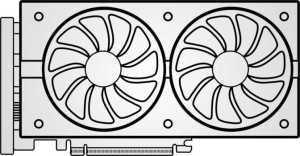
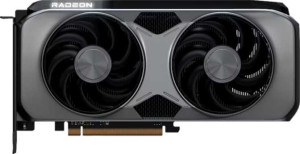
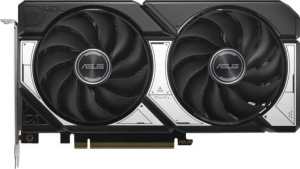
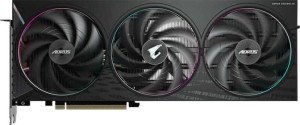
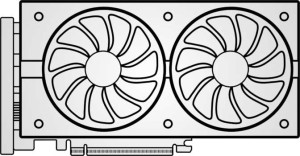
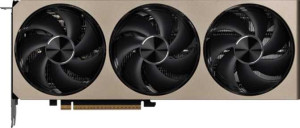
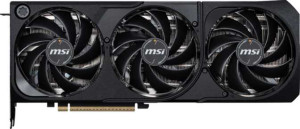
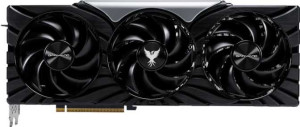
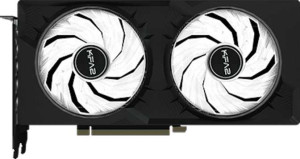
Nvidia GeForce RTX 5070 Ti specifications and in-depth review

Nvidia GeForce RTX 5070 Ti

Manufacturer: Nvidia

The Nvidia GeForce RTX 5070 Ti is a desktop graphics card based on Nvidia's Blackwell architecture, manufactured on a 5 nm process and packed with 45,600 million transistors. It operates at a base clock of 2300 MHz with a boost up to 2450 MHz, and its 43.94 TFLOPS of floating-point performance reflects the computational scale Nvidia has built into this generation. The card measures 304 mm in length and 137 mm in height, draws 300W at TDP, and connects via PCIe 5.0.

On the memory side, the RTX 5070 Ti carries 16GB of GDDR7 VRAM across a 256-bit bus, reaching an effective memory speed of 28,000 MHz and a peak bandwidth of 896 GB/s. It features 8,960 shading units, 280 texture mapping units, and 96 render output units, yielding a texture rate of 686.6 GTexels/s. Display output is handled through one HDMI 2.1b port and three DisplayPort connections, supporting up to four monitors simultaneously. The card includes support for DirectX 12 Ultimate, OpenGL 4.6, ray tracing, DLSS, Intel Resizable BAR, ECC memory, and Double Precision Floating Point.

Pros
  • Supports up to four displays simultaneously through a combination of one HDMI 2.1b and three DisplayPort outputs
  • 16GB of GDDR7 VRAM across a 256-bit bus delivers a peak memory bandwidth of 896 GB/s
  • Double Precision Floating Point support extends usability to compute-intensive workloads beyond standard graphics tasks
  • ECC memory support helps maintain data integrity in error-sensitive workloads
  • Ray tracing and DLSS are both supported, adding flexibility for compatible rendering workloads
  • PCIe 5.0 connectivity ensures the interface does not bottleneck data transfer between the card and the system
Cons
  • A 300W TDP places significant demands on the power supply and overall system cooling capacity
  • No USB-C output, which limits direct connectivity options for certain modern displays and devices
  • Does not include air-water cooling, so thermal management relies entirely on the system case and third-party solutions
  • At 304 mm in length and 137 mm in height, the card requires a spacious chassis and careful clearance planning
  • No RGB lighting for users who factor aesthetics into their build
Who is this for?

This card is well-suited to users running demanding rendering and compute workloads, given its 43.94 TFLOPS of floating-point performance, Double Precision Floating Point support, and ECC memory — attributes that matter in professional visualization, simulation, or GPU-accelerated tasks. The 16GB of GDDR7 VRAM paired with 896 GB/s of memory bandwidth also makes it a strong fit for workloads that involve large datasets or high-resolution assets. Users who need to run multi-monitor setups of up to four displays will find the combination of HDMI 2.1b and three DisplayPort outputs practical for both productivity and content creation environments.

Who is this NOT for?

The card's 300W TDP makes it poorly suited to users with compact or small-form-factor builds, where power delivery and thermal headroom are constrained. At 304 mm in length, it also requires a full-size or mid-tower chassis, ruling it out for tight enclosures. Users who rely on USB-C display connectivity — such as those pairing their system with newer monitors or external displays that lack traditional video inputs — will find no support for that here. Additionally, those prioritizing a low-power or energy-efficient system for light workloads would find the card's power requirements disproportionate to typical everyday computing tasks.

Performance:

GPU clock speed 2300 MHz
GPU turbo 2450 MHz
pixel rate 235.2 GPixel/s
floating-point performance 43.94 TFLOPS
texture rate 686.6 GTexels/s
GPU memory speed 1750 MHz
shading units 8960
texture mapping units (TMUs) 280
render output units (ROPs) 96
Has Double Precision Floating Point (DPFP)

The RTX 5070 Ti runs at a base GPU clock of 2300 MHz, boosting up to 2450 MHz under load, and delivers 43.94 TFLOPS of floating-point performance alongside a texture rate of 686.6 GTexels/s and a pixel rate of 235.2 GPixel/s. Underpinning these figures are 8,960 shading units, 280 texture mapping units, and 96 render output units, while GPU memory operates at 1750 MHz. The card also supports Double Precision Floating Point (DPFP), extending its utility to workloads that require higher numerical precision.

Memory:

effective memory speed 28000 MHz
maximum memory bandwidth 896 GB/s
VRAM 16GB
GDDR version GDDR7
memory bus width 256-bit
Supports ECC memory

The RTX 5070 Ti is equipped with 16GB of GDDR7 VRAM running across a 256-bit memory bus, reaching an effective memory speed of 28,000 MHz and a peak bandwidth of 896 GB/s. ECC memory support is also present, which helps maintain data integrity in workloads sensitive to memory errors.

Features:

DirectX version DirectX 12 Ultimate
OpenGL version 4.6
OpenCL version 3
Supports multi-display technology
supports ray tracing
Supports 3D
supports DLSS
has XeSS (XMX)
AMD SAM / Intel Resizable BAR Intel Resizable BAR
has LHR
has RGB lighting
supported displays 4

The RTX 5070 Ti supports DirectX 12 Ultimate, OpenGL 4.6, and OpenCL 3, covering a broad range of graphics and compute APIs. Ray tracing and DLSS are both supported, as are stereoscopic 3D and multi-display technology, with the card capable of driving up to four displays simultaneously. Intel Resizable BAR is included to help the CPU access GPU memory more efficiently. The card does not feature XeSS (XMX), LHR, or RGB lighting.

Ports:

has an HDMI output
HDMI ports 1
HDMI version HDMI 2.1b
DisplayPort outputs 3
USB-C ports 0
DVI outputs 0
mini DisplayPort outputs 0

The RTX 5070 Ti offers a total of four video outputs: one HDMI 2.1b port and three DisplayPort outputs. There are no USB-C, DVI, or mini DisplayPort connections on this card.

General info:

GPU architecture Blackwell
Thermal Design Power (TDP) 300W
PCI Express (PCIe) version 5
semiconductor size 5 nm
number of transistors 45600 million
Has air-water cooling
width 304 mm
height 137 mm

The RTX 5070 Ti is built on the Blackwell architecture, fabricated using a 5 nm process and integrating 45,600 million transistors. It connects via PCIe 5.0 and carries a TDP of 300W. The card measures 304 mm in width and 137 mm in height, and does not include air-water cooling.

Final Verdict

The Nvidia GeForce RTX 5070 Ti is a substantial graphics card built around the Blackwell architecture, and its specifications reflect a clear focus on high-throughput rendering and compute workloads. With 896 GB/s of memory bandwidth backed by 16GB of GDDR7 VRAM, alongside ray tracing, DLSS, ECC memory, and Double Precision Floating Point support, it covers a wide range of demanding use cases from visual content creation to GPU-accelerated computation. Its 300W TDP and 304 mm length do place real constraints on compatible system builds, and the absence of USB-C output is a practical limitation worth noting. That said, for users with a suitably equipped system, the RTX 5070 Ti delivers a well-rounded and technically capable package that aligns closely with professional and enthusiast workloads requiring both raw throughput and feature breadth.

Popular Comparisons

Nvidia GeForce RTX 5070 Ti
VS
AMD Radeon AI Pro R9700
Nvidia GeForce RTX 5070 Ti
VS
AMD Radeon RX 9070 GRE
Nvidia GeForce RTX 5070 Ti
VS
Asus Dual GeForce RTX 5060 Ti OC Edition 16GB
Nvidia GeForce RTX 5070 Ti
VS
Gigabyte Aorus GeForce RTX 5060 Ti Elite 16GB
Nvidia GeForce RTX 5070 Ti
VS
Nvidia GeForce RTX 5060 Ti 16GB
Nvidia GeForce RTX 5070 Ti
VS
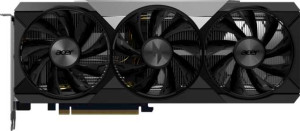
Acer Nitro Radeon RX 9070 XT OC
Nvidia GeForce RTX 5070 Ti
VS
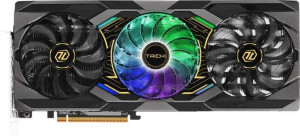
ASRock Radeon RX 9070 XT Taichi OC
Nvidia GeForce RTX 5070 Ti
VS
MSI GeForce RTX 5070 Ti Shadow 3X OC
Nvidia GeForce RTX 5070 Ti
VS
Colorful iGame GeForce RTX 5070 Ti Vulcan OC
Nvidia GeForce RTX 5070 Ti
VS
Inno3D GeForce RTX 5080 iChill Frostbite
Nvidia GeForce RTX 5070 Ti
VS
Galax GeForce RTX 5080 HOF OC Lab Plus-X
Nvidia GeForce RTX 5070 Ti
VS
MSI GeForce RTX 5080 Ventus 3X Plus
Nvidia GeForce RTX 5070 Ti
VS
Galax GeForce RTX 5080 EX Gamer 1-Click OC
Nvidia GeForce RTX 5070 Ti
VS
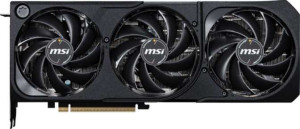
MSI GeForce RTX 5080 Inspire 3X
Nvidia GeForce RTX 5070 Ti
VS
MSI GeForce RTX 5080 Shadow 3X OC
Nvidia GeForce RTX 5070 Ti
VS
Gainward GeForce RTX 5070 Phoenix
Nvidia GeForce RTX 5070 Ti
VS
KFA2 GeForce RTX 5070 1-Click OC
Nvidia GeForce RTX 5070 Ti
VS
MSI GeForce RTX 5080 Ventus 3X OC
Nvidia GeForce RTX 5070 Ti
VS
Asus TUF Gaming GeForce RTX 5070 Ti OC Edition
Nvidia GeForce RTX 5070 Ti
VS
Asus TUF Gaming GeForce RTX 5080
Nvidia GeForce RTX 5070 Ti
VS
MSI GeForce RTX 5070 Ti Vanguard SOC
Nvidia GeForce RTX 5070 Ti
VS
Asus Prime GeForce RTX 5070 OC Edition
Nvidia GeForce RTX 5070 Ti
VS
Gainward GeForce RTX 5070 Ti Phoenix
Nvidia GeForce RTX 5070 Ti
VS
Gigabyte GeForce RTX 5070 Ti Aero OC
Nvidia GeForce RTX 5070 Ti
VS
Asus TUF Gaming GeForce RTX 5080 OC Edition
Nvidia GeForce RTX 5070 Ti
VS
MSI GeForce RTX 4070 Ti Super Expert
Nvidia GeForce RTX 5070 Ti
VS
Gigabyte GeForce RTX 4070 Super WindForce
Nvidia GeForce RTX 5070 Ti
VS
MSI GeForce RTX 4070 Ti Super Shadow 3X
Nvidia GeForce RTX 5070 Ti
VS
MSI GeForce RTX 5080 Vanguard OC
Nvidia GeForce RTX 5070 Ti
VS
MSI GeForce RTX 5080 Ventus 3X
Nvidia GeForce RTX 5070 Ti
VS
AMD Radeon RX 9070 XT
Nvidia GeForce RTX 5070 Ti
VS
Asus Prime GeForce RTX 5080 OC Edition
Nvidia GeForce RTX 5070 Ti
VS
Nvidia GeForce RTX 4080 Super
Nvidia GeForce RTX 5070 Ti
VS
Nvidia GeForce RTX 4070 Ti Super
Nvidia GeForce RTX 5070 Ti
VS
AMD Radeon RX 9070
AMD Radeon RX 9070
Nvidia GeForce RTX 5070 Ti
VS
Asus Prime GeForce RTX 5080
Nvidia GeForce RTX 5070 Ti
VS
MSI GeForce RTX 5080 Ventus 3X OC Plus
Nvidia GeForce RTX 5070 Ti
VS
Palit GeForce RTX 5060 Infinity 3 OC
Nvidia GeForce RTX 5070 Ti
VS
Nvidia RTX Pro 5000 Blackwell
Nvidia GeForce RTX 5070 Ti
VS
Nvidia RTX Pro 4000 Blackwell
Nvidia GeForce RTX 5070 Ti
VS
PowerColor Reaper Radeon RX 9070 XT
Nvidia GeForce RTX 5070 Ti
VS
Palit GeForce RTX 5070 GamingPro-S
Nvidia GeForce RTX 5070 Ti
VS
Nvidia GeForce RTX 5080
Nvidia GeForce RTX 5070 Ti
VS
Nvidia GeForce RTX 5090
Nvidia GeForce RTX 5070 Ti
VS
PNY GeForce RTX 5070 OC Triple Fan
Nvidia GeForce RTX 5070 Ti
VS
PNY GeForce RTX 5080 OC Triple Fan
Nvidia GeForce RTX 5070 Ti
VS
Nvidia GeForce RTX 5070 Ti Laptop
Nvidia GeForce RTX 5070 Ti
VS
PNY GeForce RTX 5080 ARGB Epic-X Triple Fan
Nvidia GeForce RTX 5070 Ti
VS
XFX Mercury Radeon RX 7900 XTX Magnetic Air
Nvidia GeForce RTX 5070 Ti
VS
XFX Quicksilver Radeon RX 7800 XT Magnetic Air
Nvidia GeForce RTX 5070 Ti
VS
Zotac Gaming GeForce RTX 4070 Ti Super Solid OC
Nvidia GeForce RTX 5070 Ti
VS
XFX Radeon RX 7900 GRE