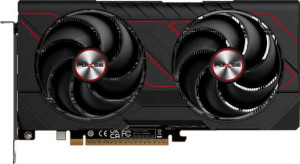
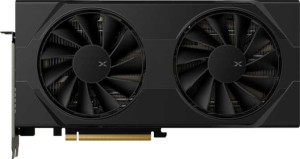
Sapphire Pulse Radeon RX 9060 XT 16GB specifications and in-depth review

Sapphire Pulse Radeon RX 9060 XT 16GB

Manufacturer: Sapphire

The Sapphire Pulse Radeon RX 9060 XT is a mid-range graphics card from Sapphire built around AMD's RDNA 4.0 architecture. Manufactured on a 4 nm process and housing 29.7 billion transistors, it targets solid rasterization and ray tracing workloads without straying into the high-end power envelope. With a 170W TDP, it sits in a relatively restrained thermal bracket for a card of its specification class, measuring 240 mm in length and 124 mm in height.

On the memory side, the card carries 16GB of GDDR6 across a 128-bit bus, reaching an effective speed of 20,000 MHz and a peak bandwidth of 322.3 GB/s, with ECC support included. The GPU itself runs a base clock of 1,700 MHz and boosts to 3,290 MHz, translating to 26.95 TFLOPS of floating-point throughput and a texture rate of 421.1 GTexels/s across 128 TMUs and 64 ROPs. Feature support spans DirectX 12 Ultimate, OpenGL 4.6, ray tracing, AMD FSR4, and AMD SAM, while display output is handled by one HDMI 2.1b port and two DisplayPort connectors, supporting up to three monitors simultaneously over a PCIe 5.0 interface.

Pros
  • 16GB of GDDR6 VRAM provides substantial frame buffer capacity for memory-intensive workloads and high-resolution textures
  • FSR4 upscaling support adds flexibility for rendering at lower resolutions and reconstructing output quality
  • Ray tracing is supported, enabling hardware-accelerated lighting and shadow effects in compatible titles
  • ECC memory support adds data integrity protection, useful for compute and semi-professional workloads
  • AMD SAM is included, allowing the CPU to access the full VRAM pool for potentially improved throughput
  • The 170W TDP keeps power draw relatively contained for the level of compute throughput the card offers
Cons
  • The 128-bit memory bus is relatively narrow, which can limit peak bandwidth scaling in bandwidth-sensitive scenarios
  • DLSS is not supported, restricting AI-driven upscaling options to FSR4 only
  • No USB-C output is available, limiting compatibility with certain monitors and display adapters
  • XeSS (XMX) is not supported, further narrowing upscaling technology options
  • No RGB lighting is present for users building systems with illuminated components
  • Water cooling is not supported or integrated, leaving thermal management entirely dependent on the air cooler
Who is this for?

This card is well-suited to users who work across both gaming and compute-oriented workloads, given its support for ECC memory, Double Precision Floating Point, and OpenCL 2.2. The generous 16GB of GDDR6 VRAM makes it a practical choice for those running high-resolution textures, large asset pipelines, or memory-heavy creative applications. Users who want hardware ray tracing, FSR4 upscaling, and multi-monitor setups of up to three displays will find the feature set well-rounded, and the 170W TDP makes it manageable for mid-tower builds without requiring exotic power delivery.

Who is this NOT for?

Users who rely exclusively on DLSS or XeSS for upscaling — common in certain game engines and workflows — will find those options unavailable here, as the card supports only FSR4. The 128-bit memory bus may also become a bottleneck in scenarios that demand sustained high bandwidth throughput, making the card less appropriate for workloads that push memory-intensive operations continuously at scale. Additionally, builders assembling RGB-coordinated systems or those requiring USB-C display connectivity will need to look elsewhere, as neither feature is present on this card.

Performance:

GPU clock speed 1700 MHz
GPU turbo 3290 MHz
pixel rate 210.6 GPixel/s
floating-point performance 26.95 TFLOPS
texture rate 421.1 GTexels/s
GPU memory speed 2518 MHz
shading units 2048
texture mapping units (TMUs) 128
render output units (ROPs) 64
Has Double Precision Floating Point (DPFP)

The Radeon RX 9060 XT runs a base GPU clock of 1,700 MHz with a boost that reaches 3,290 MHz, enabling a floating-point throughput of 26.95 TFLOPS and a pixel rate of 210.6 GPixel/s. Its 2,048 shading units are complemented by 128 texture mapping units delivering a texture rate of 421.1 GTexels/s, while 64 render output units handle pixel output. GPU memory operates at 2,518 MHz, and the card includes support for Double Precision Floating Point (DPFP), broadening its utility for compute-oriented tasks alongside standard graphics workloads.

Memory:

effective memory speed 20000 MHz
maximum memory bandwidth 322.3 GB/s
VRAM 16GB
GDDR version GDDR6
memory bus width 128-bit
Supports ECC memory

The RX 9060 XT is equipped with 16GB of GDDR6 VRAM running across a 128-bit memory bus, achieving an effective memory speed of 20,000 MHz and a maximum bandwidth of 322.3 GB/s. ECC memory support is included, which adds a layer of reliability by detecting and correcting memory errors — a useful trait for workloads where data integrity matters.

Features:

DirectX version DirectX 12 Ultimate
OpenGL version 4.6
OpenCL version 2.2
Supports multi-display technology
supports ray tracing
Supports 3D
supports DLSS
has FSR4
has XeSS (XMX)
AMD SAM / Intel Resizable BAR AMD SAM
has LHR
has RGB lighting
supported displays 3

The RX 9060 XT supports DirectX 12 Ultimate, OpenGL 4.6, and OpenCL 2.2, covering a broad range of graphics and compute API requirements. Ray tracing and stereoscopic 3D are both supported, as is AMD FSR4 for upscaling, while DLSS and XeSS (XMX) are not available on this card. Multi-display output is supported across up to three screens simultaneously, and AMD SAM (Smart Access Memory) is included to help optimize CPU-to-GPU data throughput. The card does not feature RGB lighting, and LHR (Lite Hash Rate) limitations are not present.

Ports:

has an HDMI output
HDMI ports 1
HDMI version HDMI 2.1b
DisplayPort outputs 2
USB-C ports 0
DVI outputs 0
mini DisplayPort outputs 0

The RX 9060 XT's output configuration consists of one HDMI 2.1b port and two standard DisplayPort outputs, totaling three display connectors. There are no USB-C, DVI, or mini DisplayPort outputs on this card.

General info:

GPU architecture RDNA 4.0
Thermal Design Power (TDP) 170W
PCI Express (PCIe) version 5
semiconductor size 4 nm
number of transistors 29700 million
Has air-water cooling
width 240 mm
height 124 mm

The RX 9060 XT is built on AMD's RDNA 4.0 architecture, fabricated using a 4 nm process and integrating 29,700 million transistors. It connects via a PCIe 5.0 interface and carries a Thermal Design Power rating of 170W. The card measures 240 mm in width and 124 mm in height, and it relies solely on air cooling — there is no integrated water-cooling solution.

Final Verdict

The Sapphire Pulse Radeon RX 9060 XT 16GB occupies a well-defined position as a mid-range card with broader utility than its power envelope might suggest. Its 16GB of GDDR6 VRAM paired with ECC support and DPFP capability extends its relevance beyond pure gaming into light compute and creative workloads, while the inclusion of ray tracing, FSR4, and AMD SAM rounds out a feature set that covers most modern rendering requirements. The 128-bit bus and absence of DLSS and XeSS do impose real constraints for certain use cases, and users with specific upscaling or connectivity requirements should weigh those gaps carefully. That said, for users seeking a capable, no-frills card with meaningful memory headroom and a manageable 170W TDP, the Sapphire Pulse RX 9060 XT delivers a coherent and practically well-balanced specification sheet.

Popular Comparisons

Sapphire Pulse Radeon RX 9060 XT 16GB
VS
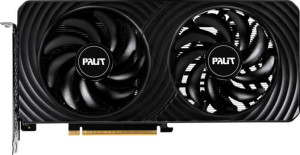
Palit GeForce RTX 5050 Dual OC
Sapphire Pulse Radeon RX 9060 XT 16GB
VS
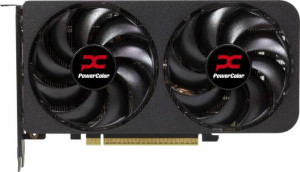
PowerColor Reaper Radeon RX 9060 XT 8GB
Sapphire Pulse Radeon RX 9060 XT 16GB
VS
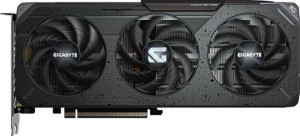
Gigabyte Radeon RX 9060 XT Gaming 8GB
Sapphire Pulse Radeon RX 9060 XT 16GB
VS
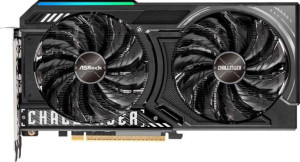
ASRock Radeon RX 9060 XT Challenger OC 16GB
Sapphire Pulse Radeon RX 9060 XT 16GB
VS
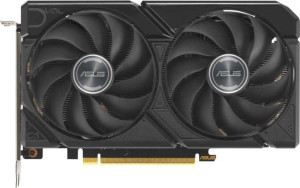
Asus Dual Radeon RX 9060 XT 16GB
Sapphire Pulse Radeon RX 9060 XT 16GB
VS
Colorful GeForce RTX 5060 Ti NB Duo 16GB
Sapphire Pulse Radeon RX 9060 XT 16GB
VS
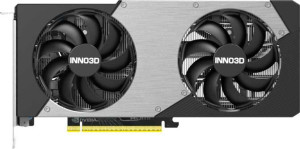
Inno3D GeForce RTX 5060 Ti Twin X2 16GB
Sapphire Pulse Radeon RX 9060 XT 16GB
VS
Palit GeForce RTX 5070 Infinity 3 OC
Sapphire Pulse Radeon RX 9060 XT 16GB
VS
Palit GeForce RTX 5070 Ti GamingPro-S OC
Sapphire Pulse Radeon RX 9060 XT 16GB
VS
Sapphire Nitro+ Radeon RX 9060 XT 16GB
Sapphire Pulse Radeon RX 9060 XT 16GB
VS
Nvidia GeForce RTX 5060
Sapphire Pulse Radeon RX 9060 XT 16GB
VS
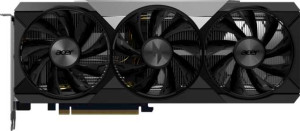
Acer Nitro Radeon RX 9070 XT OC
Sapphire Pulse Radeon RX 9060 XT 16GB
VS
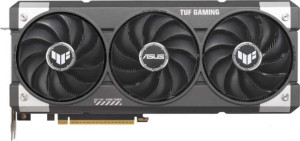
Asus TUF Gaming GeForce RTX 5060 Ti 8GB
Sapphire Pulse Radeon RX 9060 XT 16GB
VS
Acer Nitro Arc B580 OC
Sapphire Pulse Radeon RX 9060 XT 16GB
VS
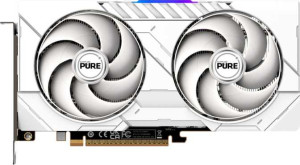
Sapphire Pure Radeon RX 9060 XT 16GB
Sapphire Pulse Radeon RX 9060 XT 16GB
VS
XFX Swift Radeon RX 9060 XT OC Gaming Edition 16GB