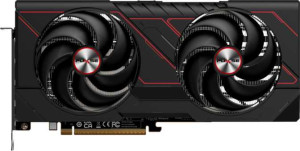
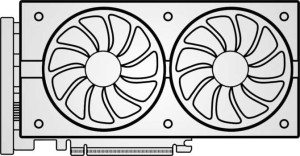
Sapphire Pulse Radeon RX 9070 specifications and in-depth review

Sapphire Pulse Radeon RX 9070

Manufacturer: Sapphire

The Sapphire Pulse Radeon RX 9070 is a graphics card from Sapphire's Pulse lineup, based on AMD's RDNA 4.0 architecture and manufactured on a 5 nm process node. It houses 3,584 shading units and reaches a boost clock of 2520 MHz, sitting alongside a base clock of 1330 MHz. The card carries a thermal design power rating of 220W and measures 280 mm in length, making it a mid-to-full-length add-in board suitable for standard ATX enclosures.

On the memory side, the RX 9070 is equipped with 16GB of GDDR6 running across a 256-bit bus at an effective speed of 20,000 MHz, yielding a peak bandwidth of 644.6 GB/s. The card supports DirectX 12 Ultimate, OpenGL 4.6, and OpenCL 2.2, and includes hardware ray tracing along with AMD FSR4 upscaling. Display output consists of two HDMI 2.1b ports and two DisplayPort outputs, allowing up to four simultaneous displays. AMD SAM (Smart Access Memory) and ECC memory support are both present, and the card connects via a PCIe 5.0 interface.

Pros
  • Equipped with 16GB of GDDR6 VRAM across a 256-bit bus, delivering a peak bandwidth of 644.6 GB/s — well-suited for memory-intensive workloads
  • Hardware ray tracing support is included alongside AMD FSR4 upscaling, enabling more visually detailed rendering with frame rate recovery options
  • Four simultaneous display outputs are supported through two HDMI 2.1b and two DisplayPort connections, offering flexible multi-monitor configurations
  • ECC memory support adds a degree of data integrity protection useful in compute or mixed-use scenarios
  • The 5 nm fabrication process allows 53,900 million transistors to be packed into a card with a relatively contained footprint of 280 mm x 120.3 mm
  • PCIe 5.0 connectivity ensures the card is compatible with current-generation platform bandwidth requirements
Cons
  • A 220W TDP places meaningful demands on system power delivery and case airflow, requiring an adequately specced build
  • No USB-C output is available, limiting compatibility with certain modern monitors and display adapters that rely on that connector
  • DLSS and XeSS upscaling are not supported, restricting upscaling options to AMD FSR4 only
  • No water-cooling option is included, leaving thermal management entirely dependent on the air-cooling solution
  • RGB lighting is absent, which may matter to users building systems with coordinated lighting setups
Who is this for?

This card is a strong fit for users running demanding graphics workloads across multiple displays, given its support for up to four simultaneous outputs via HDMI 2.1b and DisplayPort. The 16GB of GDDR6 VRAM paired with 644.6 GB/s of memory bandwidth makes it well-suited for high-resolution rendering and compute-adjacent tasks, while ECC memory support and Double Precision Floating Point capability extend its relevance to users who need a degree of data reliability beyond standard gaming. Those building on a current-generation PCIe 5.0 platform will also find the card a natural fit for a modern, future-aware system configuration.

Who is this NOT for?

Users who rely on DLSS or XeSS upscaling — whether for specific workflow tools or game compatibility — will find those options unavailable, as only AMD FSR4 is supported. The 220W TDP also makes this card a poor match for compact or thermally constrained builds, where power delivery and airflow may not accommodate its demands. Additionally, the absence of a USB-C output means it is not well-suited for users whose display setup depends on that connector, such as those using certain ultrawide or portable monitors that lack standard DisplayPort or HDMI inputs.

Performance:

GPU clock speed 1330 MHz
GPU turbo 2520 MHz
pixel rate 322.6 GPixel/s
floating-point performance 36.13 TFLOPS
texture rate 564.5 GTexels/s
GPU memory speed 2518 MHz
shading units 3584
texture mapping units (TMUs) 224
render output units (ROPs) 128
Has Double Precision Floating Point (DPFP)

The Sapphire Pulse Radeon RX 9070 operates with a base GPU clock of 1330 MHz, boosting up to 2520 MHz under load, while GPU memory runs at 2518 MHz. Its 3,584 shading units are supported by 224 texture mapping units and 128 render output units, producing a texture rate of 564.5 GTexels/s and a pixel rate of 322.6 GPixel/s. Overall floating-point throughput reaches 36.13 TFLOPS, and the card includes support for Double Precision Floating Point (DPFP), which extends its usefulness beyond purely graphics-oriented workloads.

Memory:

effective memory speed 20000 MHz
maximum memory bandwidth 644.6 GB/s
VRAM 16GB
GDDR version GDDR6
memory bus width 256-bit
Supports ECC memory

The card is equipped with 16GB of GDDR6 VRAM running across a 256-bit memory bus, with an effective memory speed of 20,000 MHz that delivers a maximum bandwidth of 644.6 GB/s. ECC memory support is also included, adding a layer of data integrity protection that can be relevant in workloads sensitive to memory errors.

Features:

DirectX version DirectX 12 Ultimate
OpenGL version 4.6
OpenCL version 2.2
Supports multi-display technology
supports ray tracing
Supports 3D
supports DLSS
has FSR4
has XeSS (XMX)
AMD SAM / Intel Resizable BAR AMD SAM
has LHR
has RGB lighting
supported displays 4

The Sapphire Pulse Radeon RX 9070 supports DirectX 12 Ultimate, OpenGL 4.6, and OpenCL 2.2, covering a broad range of graphics and compute APIs. Hardware ray tracing is included, as is stereoscopic 3D and multi-display support for up to four simultaneous outputs. For upscaling, the card features AMD FSR4 but does not support DLSS or XeSS. AMD SAM (Smart Access Memory) is present to help optimize CPU-to-GPU data throughput, while LHR restrictions and RGB lighting are both absent from this model.

Ports:

has an HDMI output
HDMI ports 2
HDMI version HDMI 2.1b
DisplayPort outputs 2
USB-C ports 0
DVI outputs 0
mini DisplayPort outputs 0

The card's output configuration consists of two HDMI 2.1b ports and two DisplayPort outputs, providing a total of four display connections. There are no DVI, mini DisplayPort, or USB-C outputs present on this model.

General info:

GPU architecture RDNA 4.0
Thermal Design Power (TDP) 220W
PCI Express (PCIe) version 5
semiconductor size 5 nm
number of transistors 53900 million
Has air-water cooling
width 280 mm
height 120.3 mm

Built on the RDNA 4.0 architecture and fabricated using a 5 nm process, the GPU integrates 53,900 million transistors and connects to the host system via a PCIe 5.0 interface. It carries a thermal design power rating of 220W and relies solely on air cooling, with no water-cooling solution included. The card measures 280 mm in width and 120.3 mm in height.

Final Verdict

The Sapphire Pulse Radeon RX 9070 presents a well-rounded specification sheet for users invested in AMD's current-generation ecosystem, anchored by its 16GB GDDR6 VRAM with 644.6 GB/s of memory bandwidth and built on the RDNA 4.0 architecture at a 5 nm node. Hardware ray tracing, FSR4 upscaling, ECC memory support, and four-display output capability give it a feature set that extends meaningfully beyond basic rasterization tasks, while PCIe 5.0 connectivity keeps it aligned with modern platform standards. Its 220W power requirement and the absence of DLSS, XeSS, and USB-C output do narrow its appeal for certain users and system configurations, but within its intended scope — high-resolution workloads, multi-display setups, and compute-adjacent use on an AMD platform — the card delivers a coherent and capable package.

Popular Comparisons

Sapphire Pulse Radeon RX 9070
VS
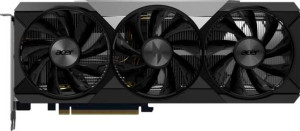
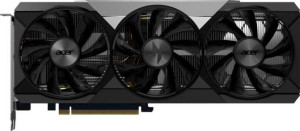
Acer Nitro Radeon RX 9070 OC
Sapphire Pulse Radeon RX 9070
VS
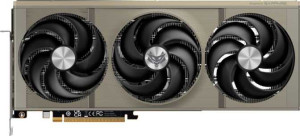
Sapphire Nitro+ Radeon RX 9070 XT
Sapphire Pulse Radeon RX 9070
VS
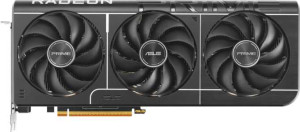
Asus Prime Radeon RX 9070 XT OC Edition
Sapphire Pulse Radeon RX 9070
VS
AMD Radeon RX 9070 XT
Sapphire Pulse Radeon RX 9070
VS
Acer Nitro Radeon RX 9070 XT
Sapphire Pulse Radeon RX 9070
VS
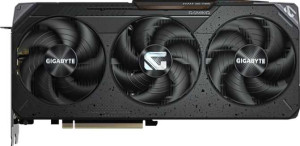
Gigabyte Radeon RX 9070 XT Gaming OC
Sapphire Pulse Radeon RX 9070
VS
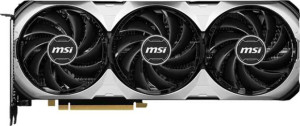
MSI GeForce RTX 4070 Ti Super Ventus 3X OC
Sapphire Pulse Radeon RX 9070
VS
PowerColor Reaper Radeon RX 9070 XT
Sapphire Pulse Radeon RX 9070
VS
Sapphire Pure Radeon RX 9070 XT
Sapphire Pulse Radeon RX 9070
VS
Sapphire Pulse Radeon RX 9070 XT
Sapphire Pulse Radeon RX 9070
VS
XFX Mercury Radeon RX 9070 XT Gaming Edition