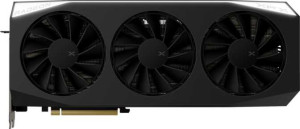
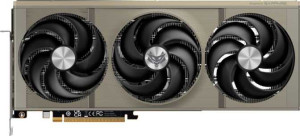
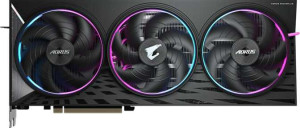
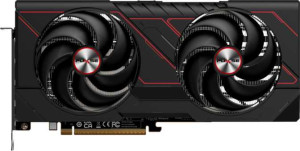
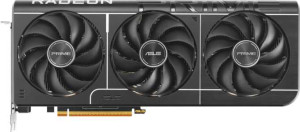
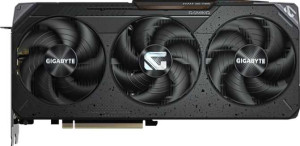
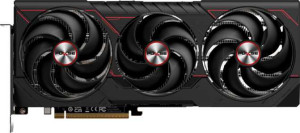
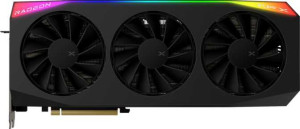
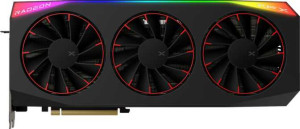
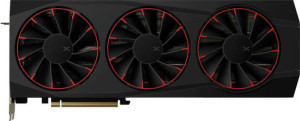
XFX Mercury Radeon RX 9070 XT Gaming Edition specifications and in-depth review

XFX Mercury Radeon RX 9070 XT Gaming Edition

Manufacturer: XFX

The XFX Mercury Radeon RX 9070 XT Gaming Edition is a graphics card designed around AMD's RDNA 4.0 architecture, manufactured on a 4nm process node with 53.9 billion transistors. It operates at a base clock of 1660 MHz with a boost ceiling of 2970 MHz, and its 48.66 TFLOPS of floating-point performance places it firmly in the higher tier of consumer GPU offerings. The card includes RGB lighting and supports up to four simultaneous displays.

On the memory side, the card is equipped with 16GB of GDDR6 VRAM across a 256-bit bus, delivering a maximum bandwidth of 640 GB/s at an effective speed of 20000 MHz. With 4096 shading units, 256 TMUs, and 128 ROPs, the hardware configuration supports a texture rate of 760.3 GTexels/s and a pixel rate of 380.2 GPixels/s. The card carries a TDP of 304W, connects via PCIe 5.0, supports DirectX 12 Ultimate, ray tracing, and AMD FSR4, and includes one HDMI 2.1b port alongside three DisplayPort outputs. A three-year warranty is included.

Pros
  • Supports up to four simultaneous displays, offering flexible multi-monitor setups
  • 16GB of GDDR6 VRAM with a 256-bit bus and 640 GB/s bandwidth handles large textures and memory-intensive workloads without running short
  • ECC memory support adds a layer of data integrity for compute tasks
  • Ray tracing and AMD FSR4 upscaling are both supported, enabling their respective visual and performance features
  • Comes with a three-year warranty, providing extended post-purchase coverage
  • RGB lighting is built in, allowing visual customization without requiring additional hardware
Cons
  • A 304W TDP places significant demands on the power supply, requiring a capable PSU
  • No USB-C output is available, limiting connectivity options for certain modern monitors
  • DLSS and XeSS are not supported, restricting upscaling options to AMD FSR4 only
  • The 360mm card length may not fit in smaller or compact PC cases
  • Water cooling is not supported, so thermal management relies entirely on the air-cooling solution
Who is this for?

This card is well-suited to users who run demanding graphics workloads across multiple displays, given its support for up to four simultaneous outputs and its 16GB of GDDR6 VRAM backed by 640 GB/s of memory bandwidth. The inclusion of ray tracing, AMD FSR4, and DirectX 12 Ultimate makes it a solid fit for those working with modern rendering pipelines and compute tasks, while ECC memory support extends its appeal to users who require data integrity in GPU-accelerated workloads. Its PCIe 5.0 interface also makes it a natural pairing with current-generation platform builds.

Who is this NOT for?

Users working within compact or small-form-factor builds may find the 360mm card length incompatible with their cases, and the 304W TDP demands a robust power supply that lower-wattage systems may not accommodate. Those invested in DLSS or XeSS-based upscaling workflows will find neither technology supported here, making the card a poor fit for pipelines built around those specific tools. Additionally, the absence of water cooling support means users in thermally constrained environments with limited airflow may struggle to maintain stable operating conditions under sustained load.

Performance:

GPU clock speed 1660 MHz
GPU turbo 2970 MHz
pixel rate 380.2 GPixel/s
floating-point performance 48.66 TFLOPS
texture rate 760.3 GTexels/s
GPU memory speed 2518 MHz
shading units 4096
texture mapping units (TMUs) 256
render output units (ROPs) 128
Has Double Precision Floating Point (DPFP)

The XFX Mercury Radeon RX 9070 XT Gaming Edition runs at a base GPU clock of 1660 MHz, boosting up to 2970 MHz under load, while its 4096 shading units work alongside 256 TMUs and 128 ROPs to deliver a texture rate of 760.3 GTexels/s and a pixel rate of 380.2 GPixels/s. Floating-point performance reaches 48.66 TFLOPS, and the GPU memory operates at 2518 MHz to keep up with demanding workloads. The card also supports Double Precision Floating Point (DPFP), broadening its suitability for compute-oriented tasks beyond standard graphics rendering.

Memory:

effective memory speed 20000 MHz
maximum memory bandwidth 640 GB/s
VRAM 16GB
GDDR version GDDR6
memory bus width 256-bit
Supports ECC memory

This card is equipped with 16GB of GDDR6 VRAM running across a 256-bit memory bus, reaching an effective memory speed of 20000 MHz and a maximum bandwidth of 640 GB/s. ECC memory support is also included, which helps maintain data integrity during compute workloads by detecting and correcting memory errors.

Features:

DirectX version DirectX 12 Ultimate
OpenGL version 4.6
OpenCL version 2.2
Supports multi-display technology
supports ray tracing
Supports 3D
supports DLSS
has FSR4
has XeSS (XMX)
AMD SAM / Intel Resizable BAR AMD SAM
has LHR
has RGB lighting
supported displays 4

The card supports DirectX 12 Ultimate, OpenGL 4.6, and OpenCL 2.2, covering a broad range of graphics and compute APIs. Ray tracing and stereoscopic 3D are both supported, and AMD FSR4 is available for upscaling, while DLSS and XeSS (XMX) are not supported. Multi-display functionality is present with support for up to four simultaneous displays, and AMD SAM (Smart Access Memory) is included to allow the CPU broader access to VRAM. The card does not feature LHR (Lite Hash Rate) limiting, and RGB lighting is built in for visual customization.

Ports:

has an HDMI output
HDMI ports 1
HDMI version HDMI 2.1b
DisplayPort outputs 3
USB-C ports 0
DVI outputs 0
mini DisplayPort outputs 0

The card's output configuration consists of three DisplayPort outputs and a single HDMI 2.1b port, providing four physical connections in total. There are no DVI, mini DisplayPort, or USB-C outputs present on this model.

General info:

GPU architecture RDNA 4.0
Thermal Design Power (TDP) 304W
PCI Express (PCIe) version 5
semiconductor size 4 nm
number of transistors 53900 million
warranty period 3 years
Has air-water cooling
width 360 mm
height 155 mm

Built on the RDNA 4.0 architecture and fabricated using a 4nm process, this card packs 53,900 million transistors and connects to the motherboard via PCIe 5.0. It carries a TDP of 304W and relies on air cooling, as water cooling is not supported. The card measures 360mm in width and 155mm in height, and comes backed by a 3-year warranty.

Final Verdict

The XFX Mercury Radeon RX 9070 XT Gaming Edition is a well-specified graphics card built around AMD's RDNA 4.0 architecture, combining a strong compute throughput of 48.66 TFLOPS with 16GB of GDDR6 VRAM at 640 GB/s bandwidth — a combination that positions it comfortably for users running memory-intensive rendering, multi-display setups, or GPU-accelerated compute tasks. Support for ray tracing, AMD FSR4, DirectX 12 Ultimate, and ECC memory rounds out a technically capable feature set, though prospective buyers should weigh the 304W power draw, the 360mm card length, and the absence of DLSS and XeSS support against their specific platform and workflow requirements. For users whose systems and use cases align with what this card offers, it represents a technically coherent and well-equipped choice within its product category.

Popular Comparisons

XFX Mercury Radeon RX 9070 XT Gaming Edition
VS
MSI GeForce RTX 5070 Ti MLG Edition
XFX Mercury Radeon RX 9070 XT Gaming Edition
VS
Sapphire Nitro+ Radeon RX 9070 XT
XFX Mercury Radeon RX 9070 XT Gaming Edition
VS
Gigabyte Aorus Radeon RX 9070 XT Elite
XFX Mercury Radeon RX 9070 XT Gaming Edition
VS
Sapphire Pulse Radeon RX 9070
XFX Mercury Radeon RX 9070 XT Gaming Edition
VS
Asus Prime Radeon RX 9070 XT OC Edition
XFX Mercury Radeon RX 9070 XT Gaming Edition
VS
Gigabyte Radeon RX 9070 XT Gaming OC
XFX Mercury Radeon RX 9070 XT Gaming Edition
VS
Sapphire Pulse Radeon RX 9070 XT
XFX Mercury Radeon RX 9070 XT Gaming Edition
VS
XFX Mercury Radeon RX 9070 XT OC Gaming Edition
XFX Mercury Radeon RX 9070 XT Gaming Edition
VS
XFX Mercury Radeon RX 9070 XT OC Magnetic Air Edition
XFX Mercury Radeon RX 9070 XT Gaming Edition
VS
XFX Quicksilver Radeon RX 9070 XT Magnetic Air Edition
XFX Mercury Radeon RX 9070 XT Gaming Edition
VS
XFX Swift Radeon RX 9070 OC Triple Fan Gaming Edition
XFX Mercury Radeon RX 9070 XT Gaming Edition
VS
Zotac Gaming GeForce RTX 5080 Solid OC